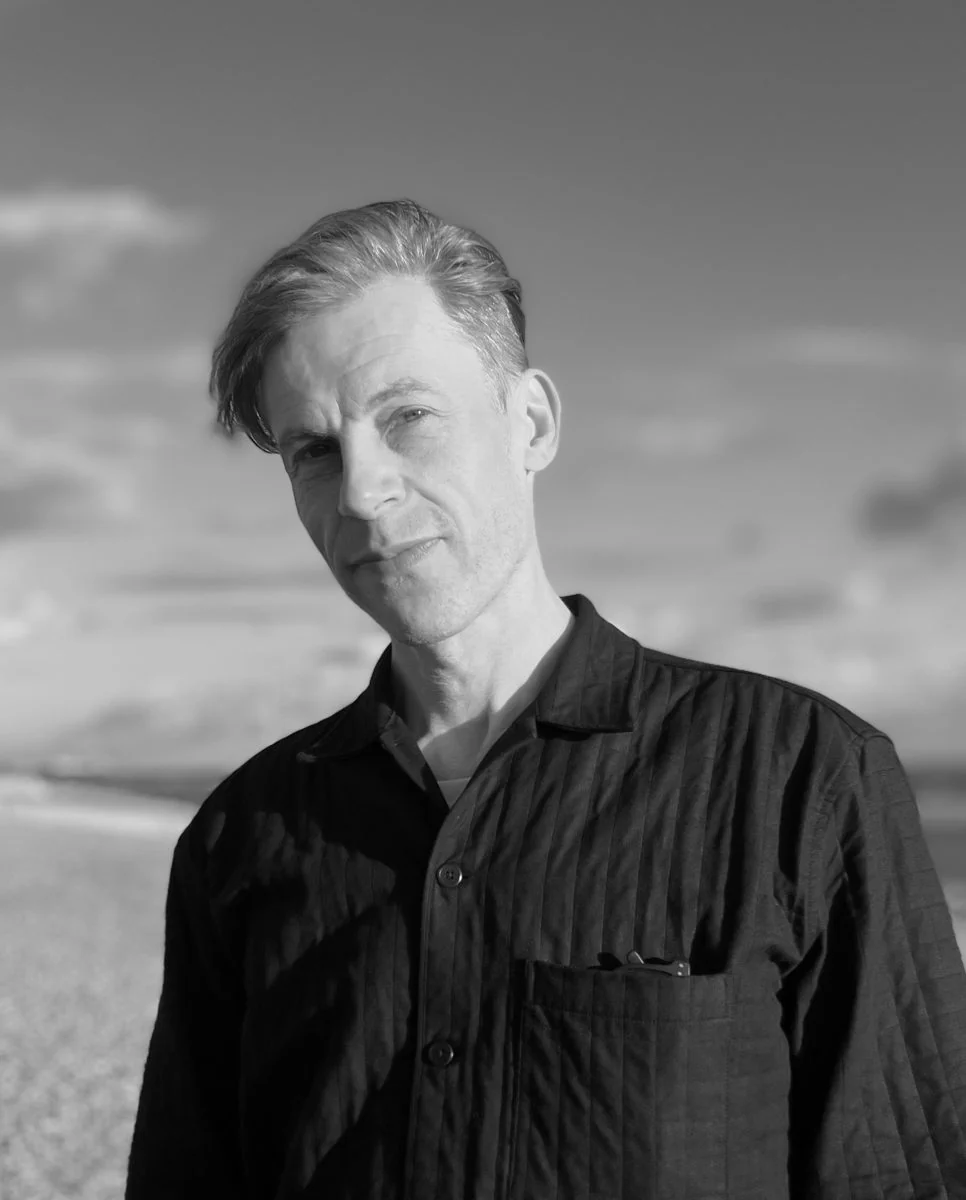
About
UX leadership with a creative core.
UX leader and product designer driving user-centred design, strategy and AI transformation. As AI changes both how we work and the products we build, I collaborate with cross-functional teams to deliver scalable, smart product visions. I ground the work in design thinking and data, always keeping customer experience and business impact in the same conversation.
I mentor, grow and retain high-performing design teams through shared vision and empowerment. With product and engineering I put the habits in place that make quality repeatable — staying close enough to research, prototype and measure, because I need to understand the material I'm asking other people to shape.
How I work
Work out the job before drawing the screen
Before any design starts I want to know which problem is worth solving and what a good result looks like. That means talking to the people doing the work, looking at the data, and agreeing the measures with the team who will build it.
Bring the whole team in on day one
Product, engineering, data and research join while the design is still rough. Each of them sees options I wouldn't. We prototype and test early, ship in small steps, then watch how it's used and keep improving it. Launch is where the learning starts.
Give people real ownership
I grow designers by handing them proper work and being straight about how it's going, then helping them towards whatever they want next. I stay with the work through delivery and after launch, coaching the people who pick it up, so the thinking outlasts my part in it.
I use the tools before I ask anyone else to
I build with AI myself, from making sense of research to prototyping to reading the results, so I know what it does well and where it gets in the way. That matters when I'm leading a team through the change.
Case studies
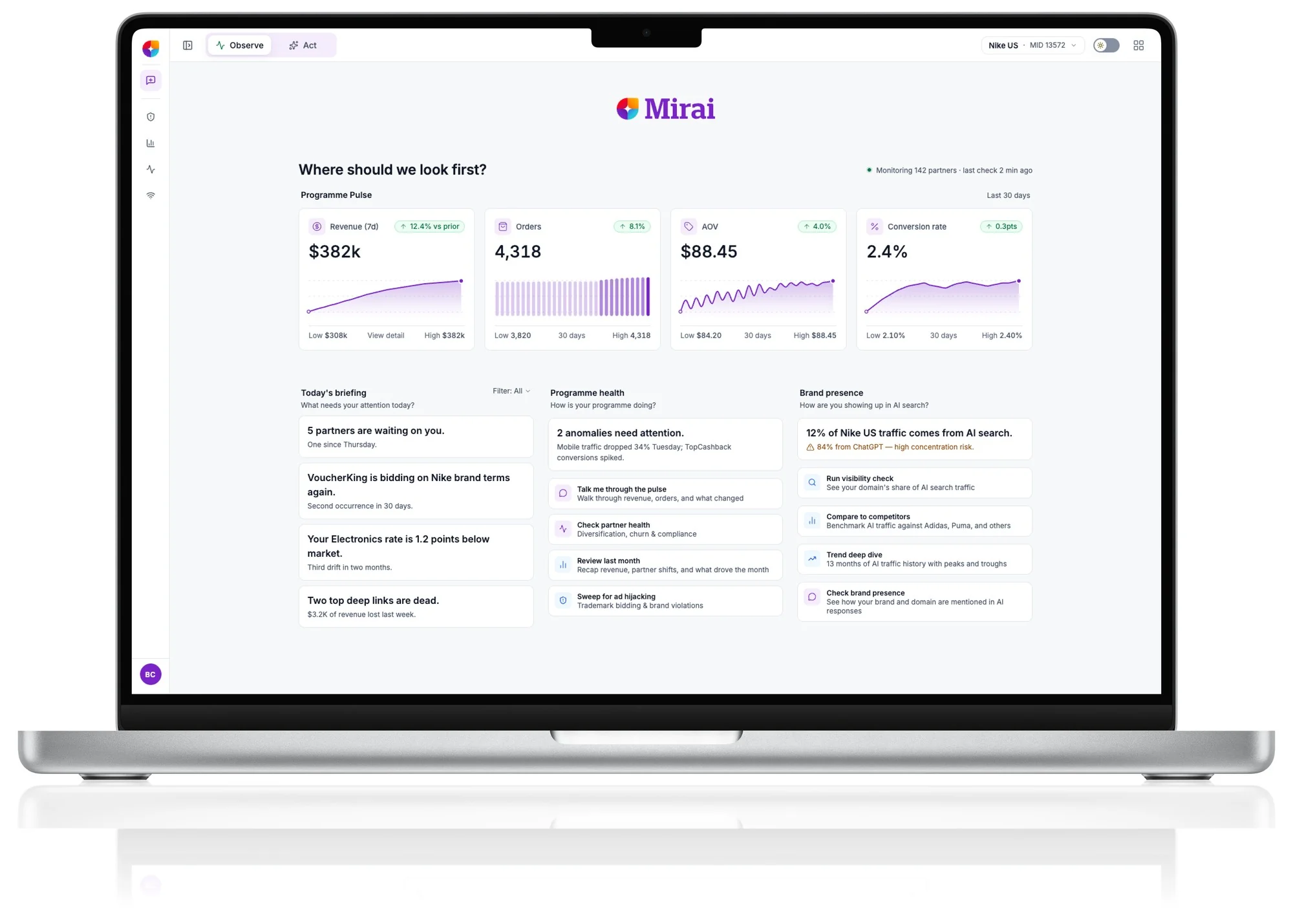
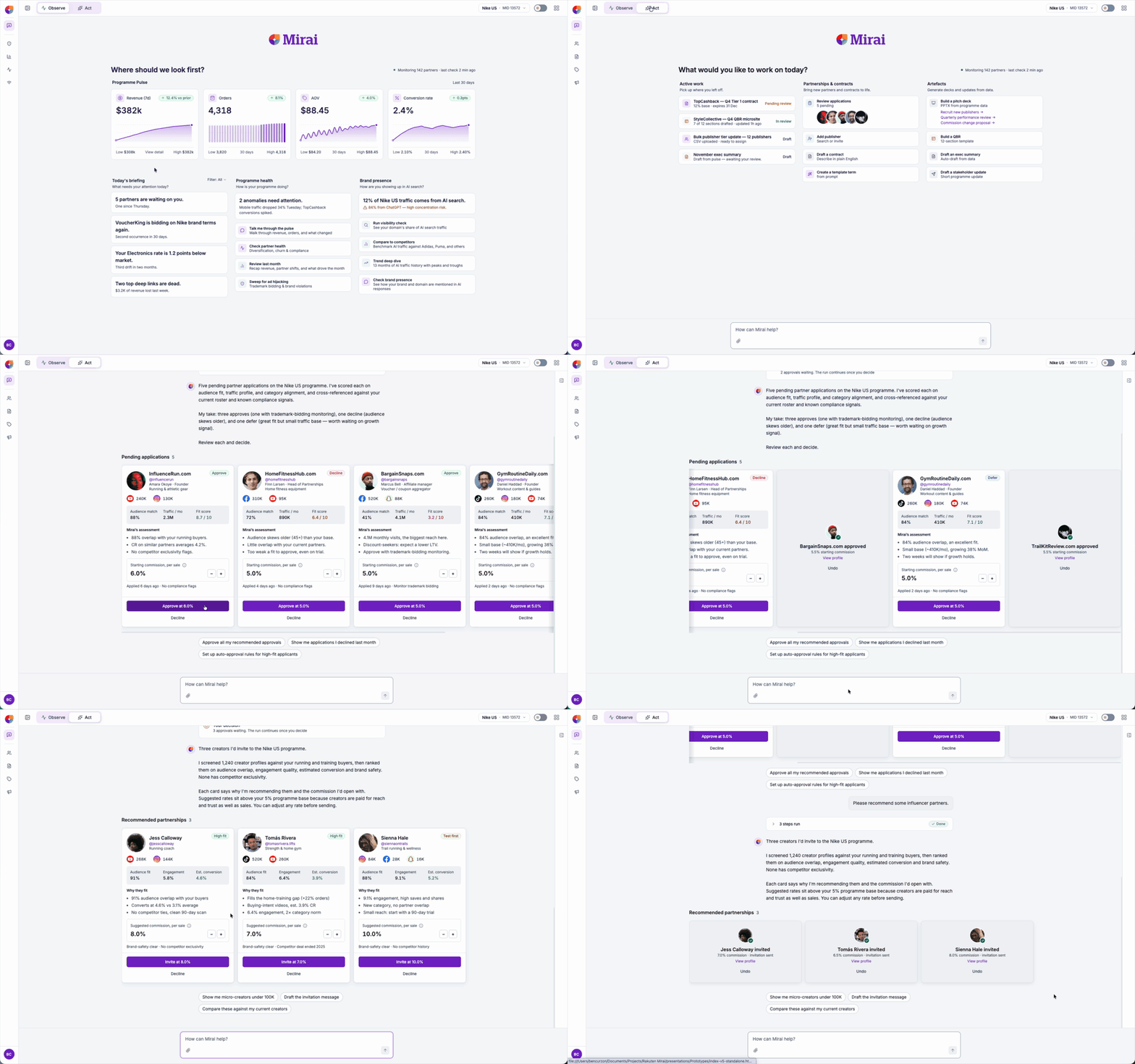
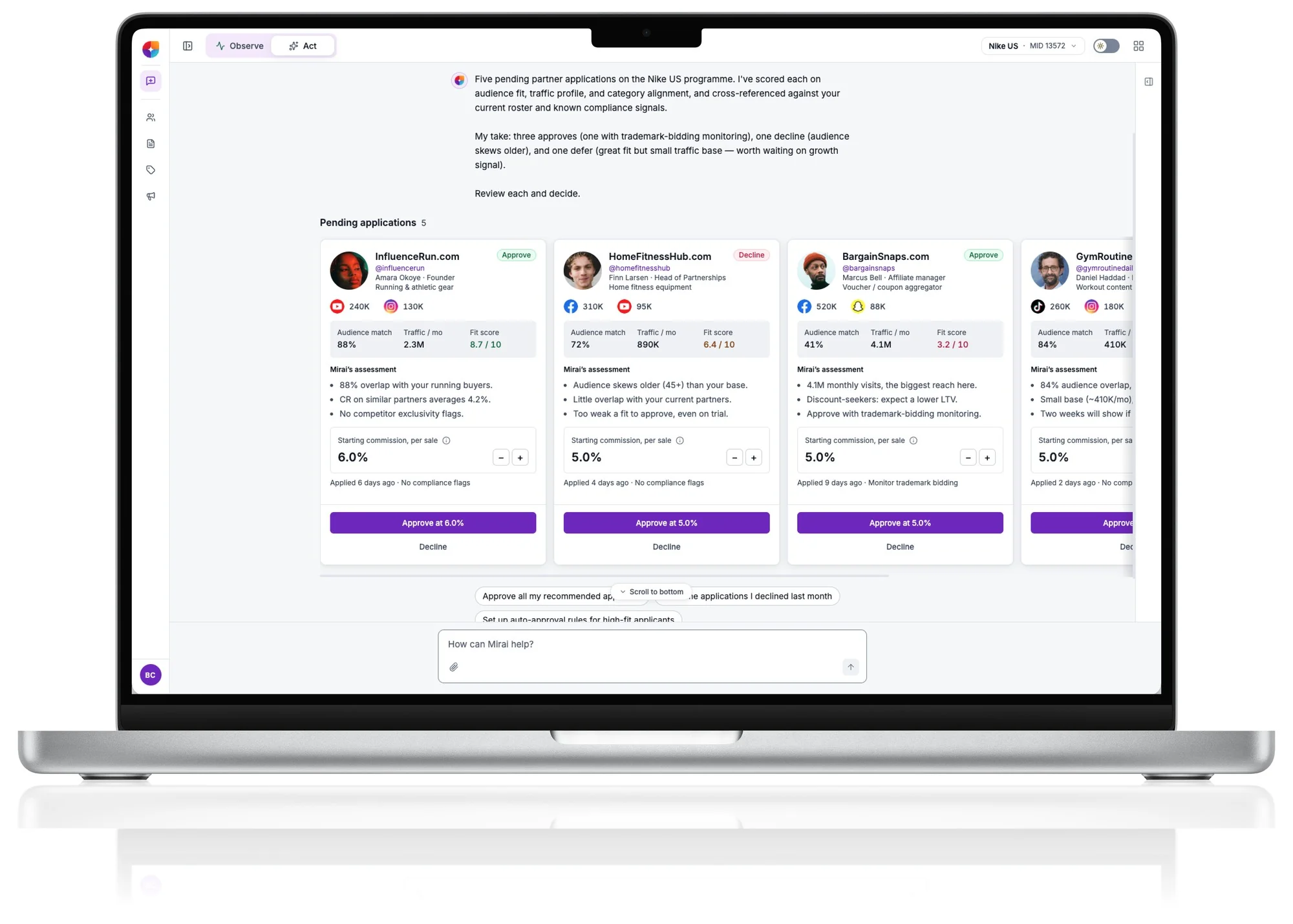
Rakuten Advertising's affiliate tools were disjointed, form-based SaaS dashboards. Mirai replaces them with a team of specialised agents and a portable design system that create and manage offers through conversation.
Disjointed SaaS dashboards built around static, form-based tasks and disparate data. The real work wasn't a chatbot — it was rethinking the tasks themselves.
UX Design Manager, leading vision and design direction with an SVP sponsor, Product, Engineering and QA — and Data Science on the MCP endpoints behind each agent.
Interviews and data defined the tasks worth automating. Agent endpoints were validated with Data Science before design. A portable, MCP-based design system was built alongside — now the test-bed for every AI application the business builds next.
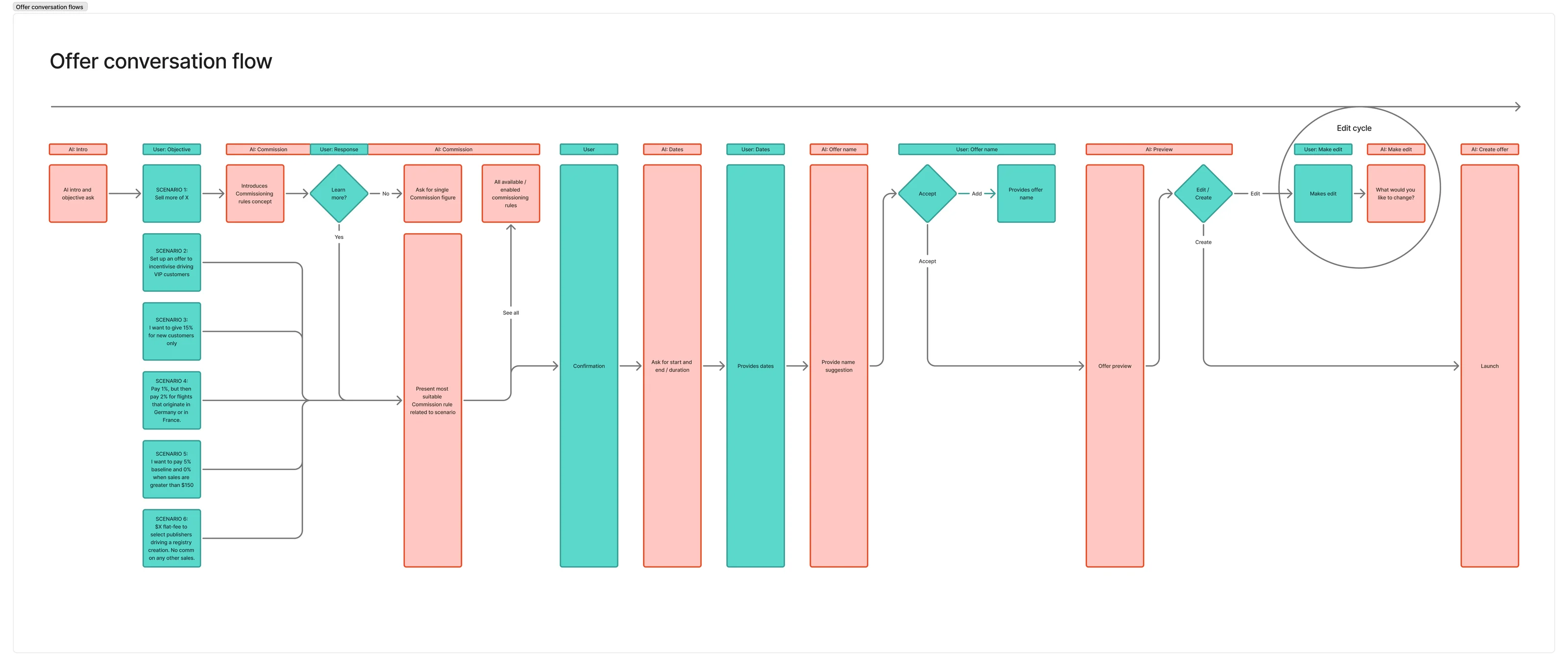
Before any screens, I mapped how a conversation with an agent should unfold: what it asks, the choices a person makes, and where an edit loops back. Early flows like these kept design, product and engineering aligned on the whole exchange.
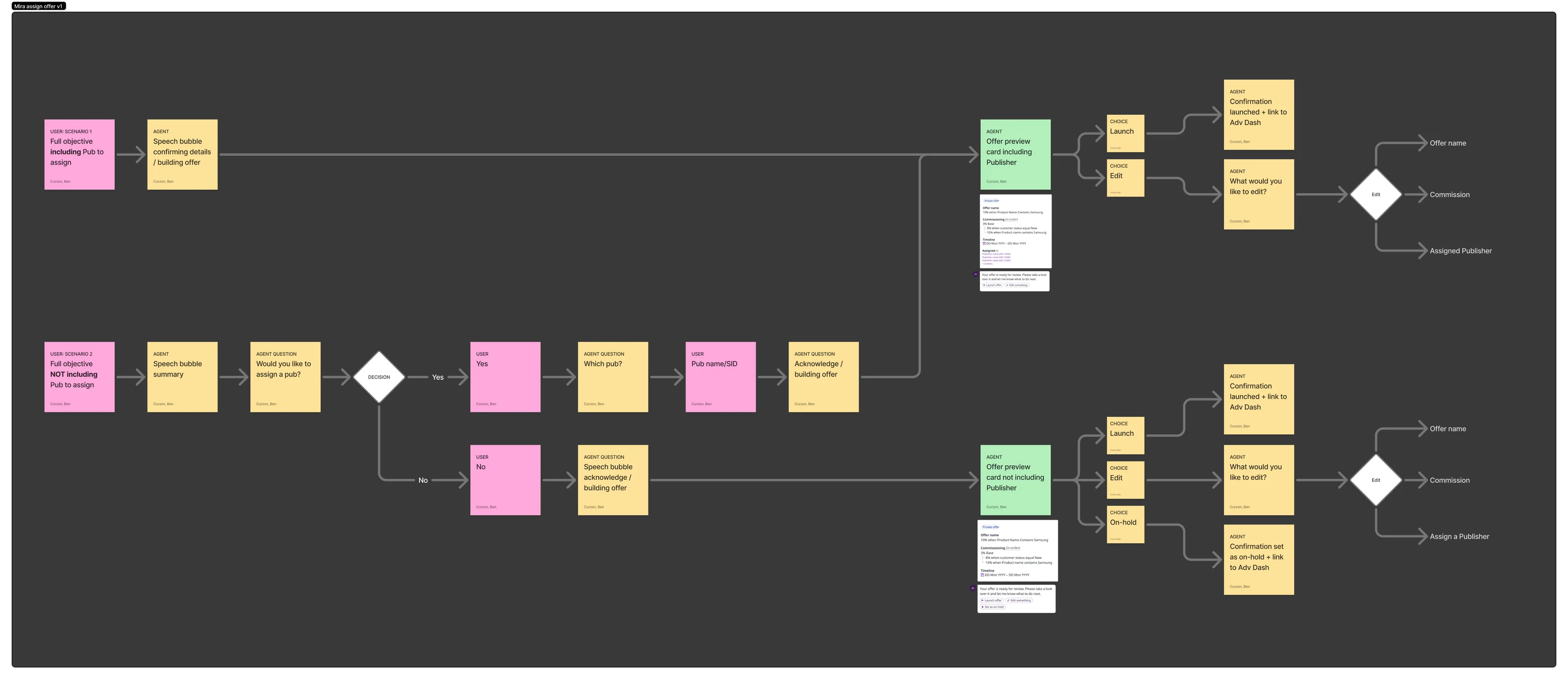
A key design question was what an agent's answer looks like when words aren't enough. Alongside text, agents can return small interactive cards inside the conversation — a performance chart, or an offer preview with action buttons — so people can act on an answer, not just read it.
Some answers are clearer as a chart or a preview than as a paragraph.
Built on an open standard, so a card works wherever the conversation happens.
Conversation serves the moment; always-on views are a separate surface.
93% faster offer creation. The design system is now the shared foundation for AI across the business, and the wider initiative contributed to a $200M increase in network gross sales.
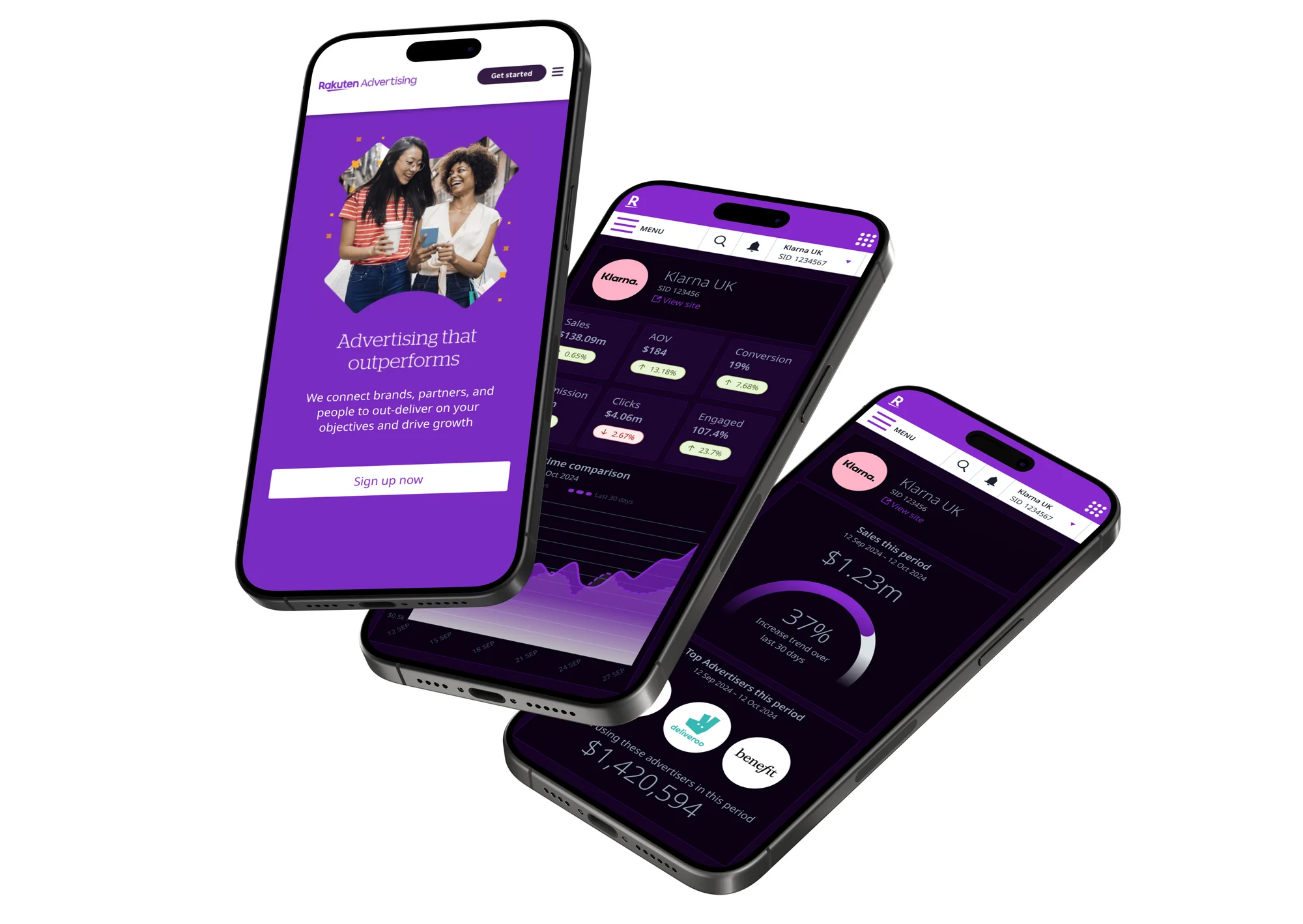
An emerging Creator use case had inherited a desktop-first dashboard. Small-viewport usage was growing faster than the product adapted — so onboarding was rebuilt around it. 68% activation uplift within a year.
Generative research with the Creator segment, data analysis and journey mapping; technical validation alongside design so the journey was buildable; hands-on flows, prototyping and usability testing as requirements evolved.
68% activation uplift within a year of launch. As features kept evolving I stayed on as knowledge guardian, coaching other designers so the approach held up past launch.
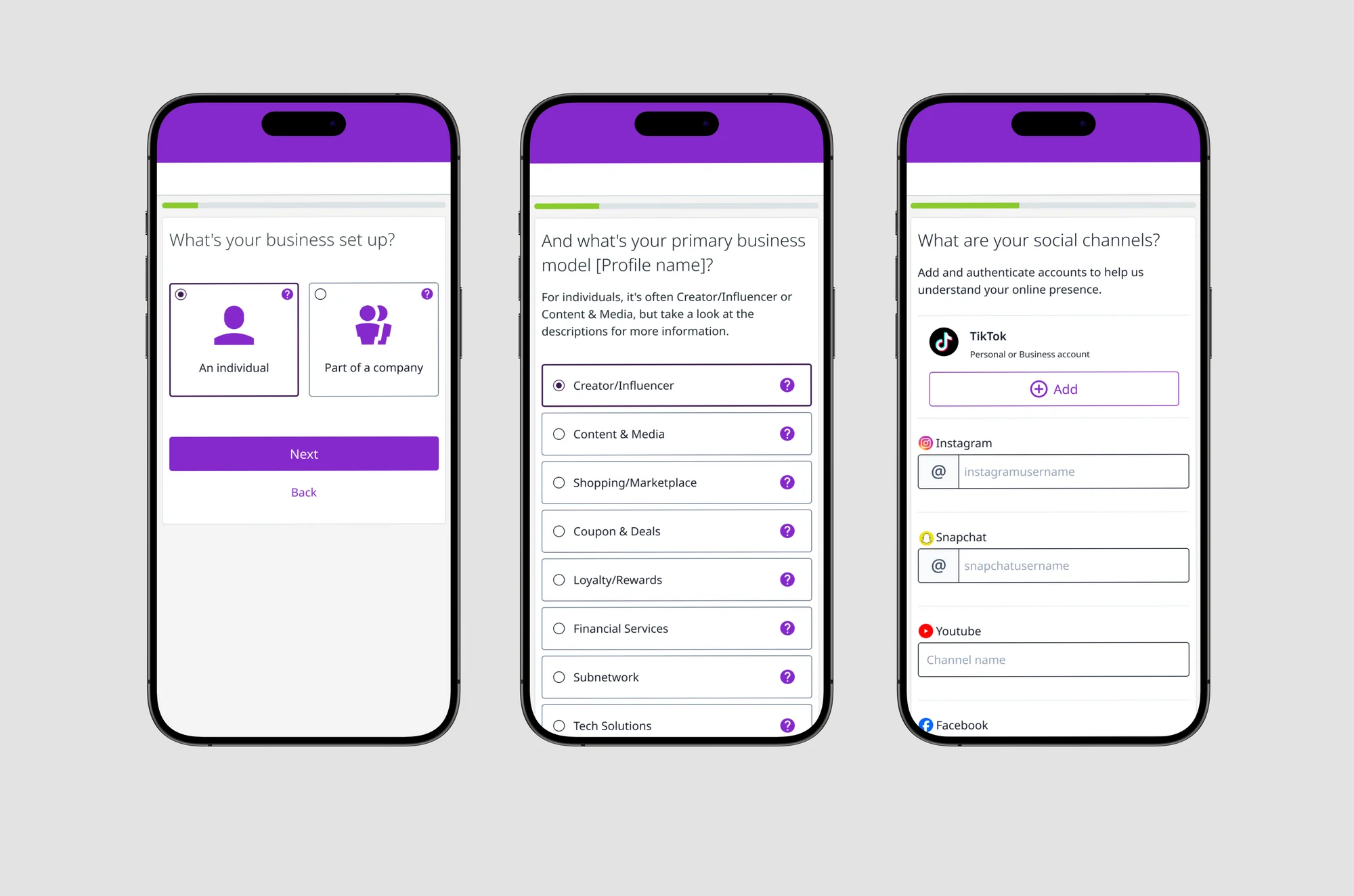
A growing Influencer and Creator user base was reaching the platform on their phones, but the dashboard had been designed desktop-first. I reworked it for compact viewports so the numbers a Creator checks most, such as sales, commission and campaign performance, lead each screen. Cards, charts and lists were redesigned to fit a narrow screen rather than simply shrunk to it.
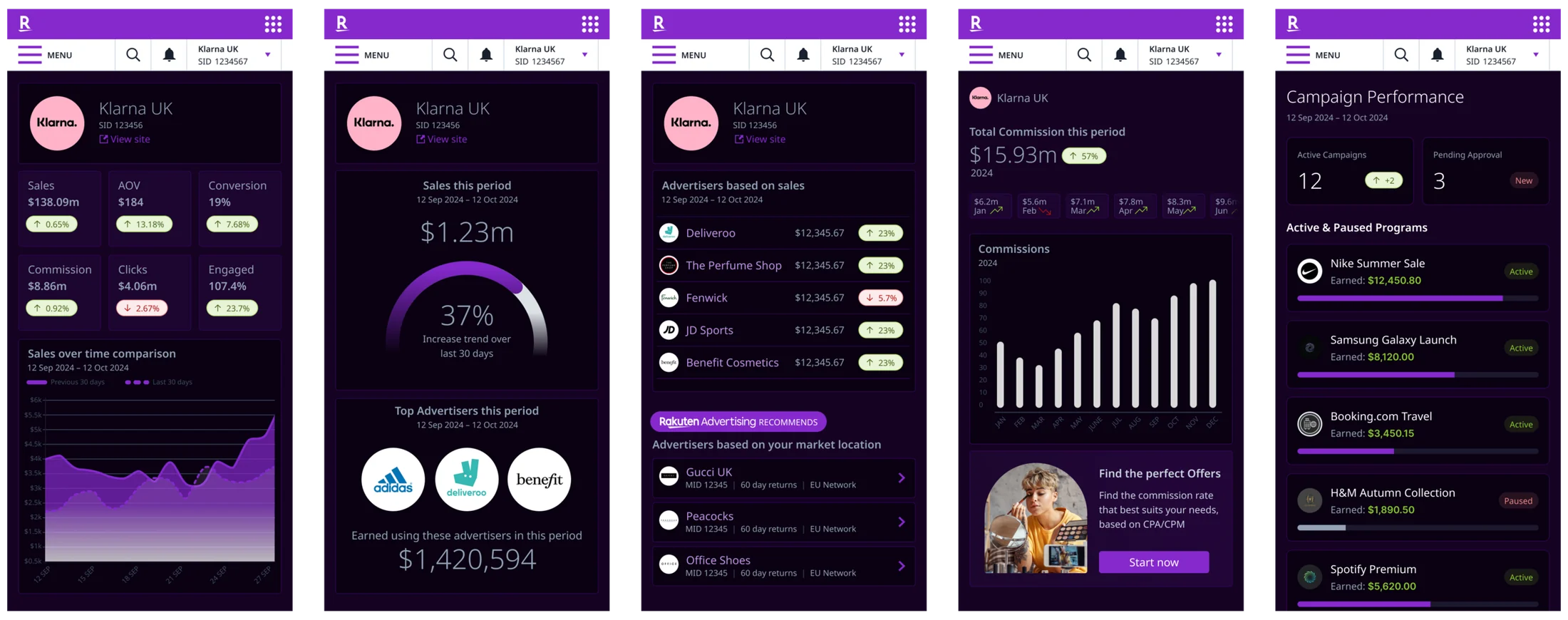
New Creators now start on the same mobile-first footing, with a short step-by-step flow for business set-up, business model and social channels.
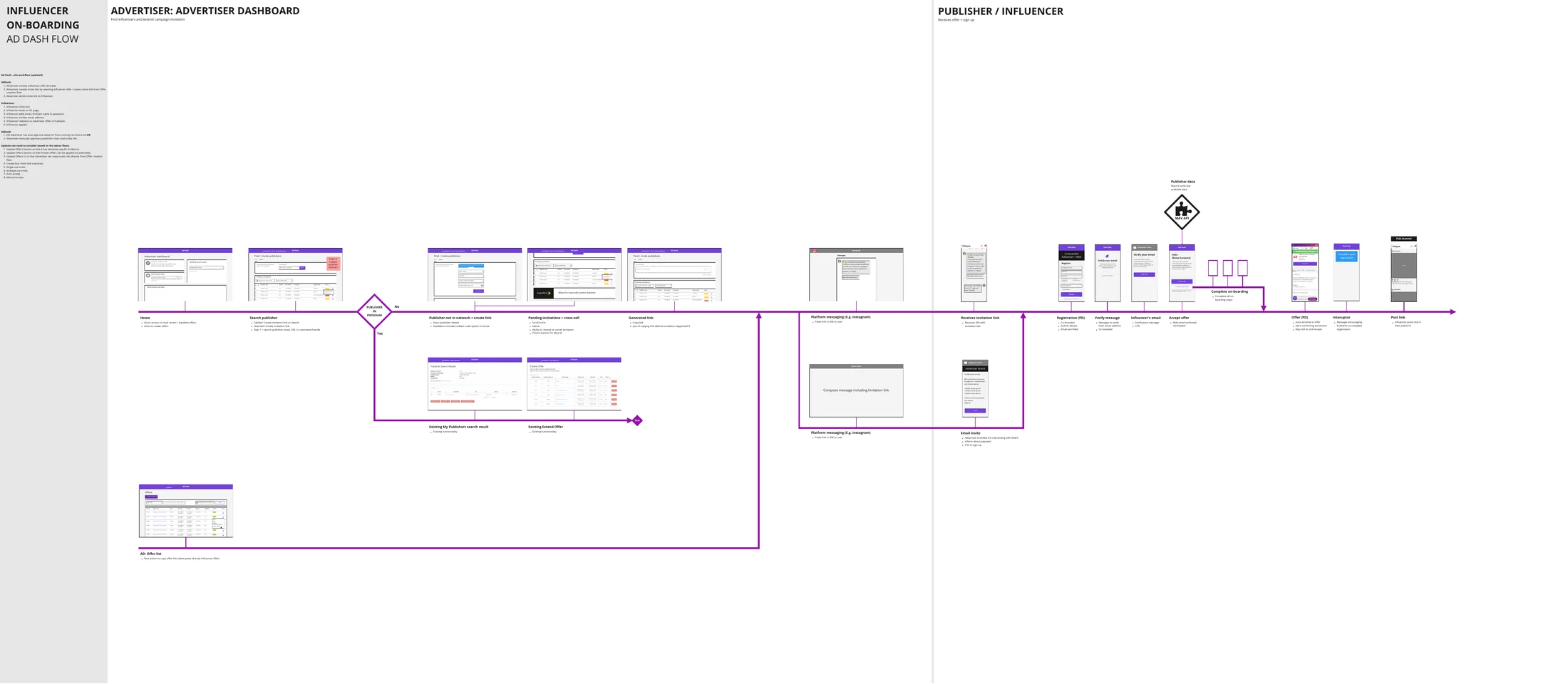
Before any screens were polished, I mapped how onboarding would connect with an Influencer Marketing Platform: from an advertiser inviting an influencer, through registration and verification, to the first offer and a shared link. Flows like this kept design, product and engineering aligned on the whole journey.
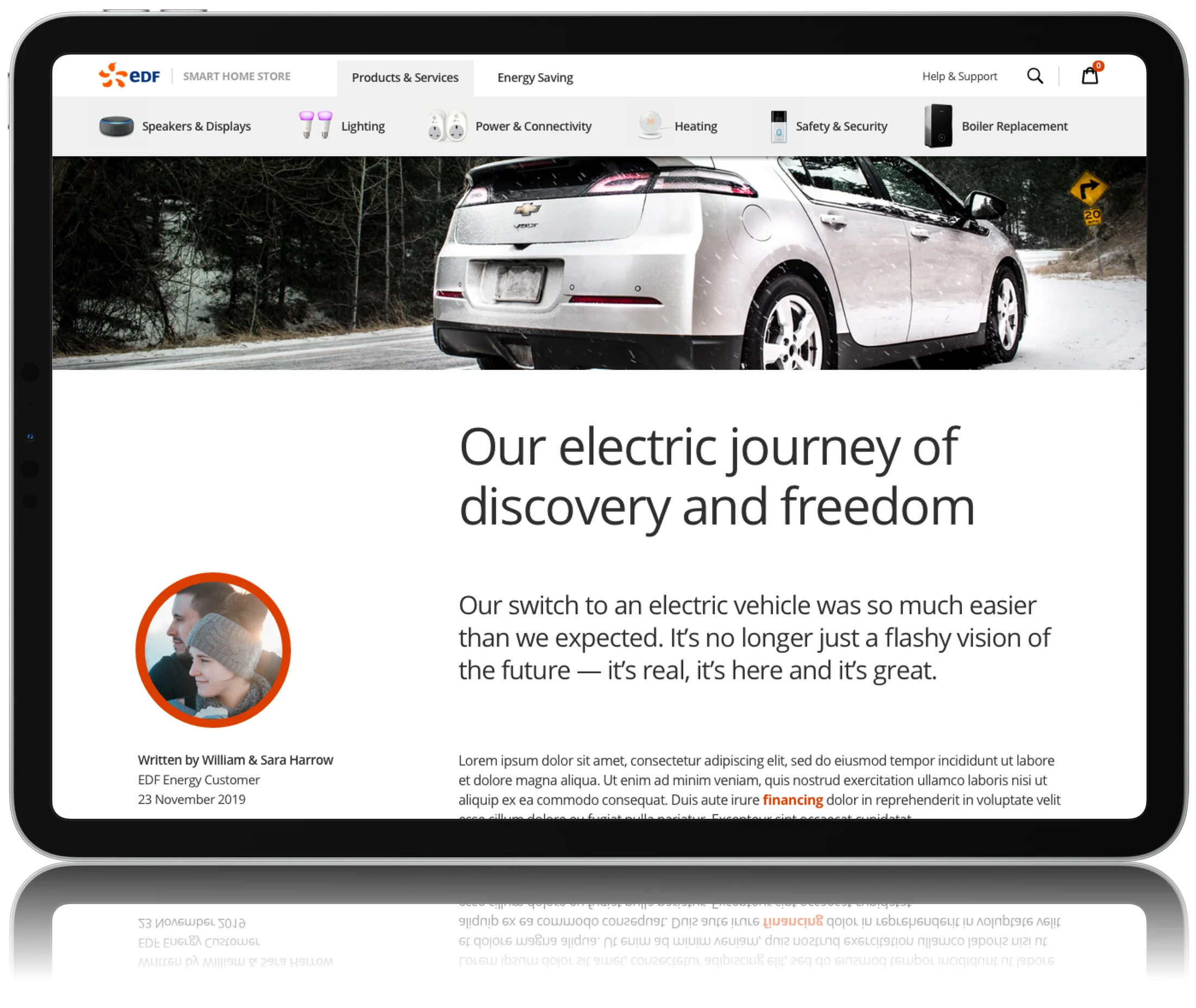
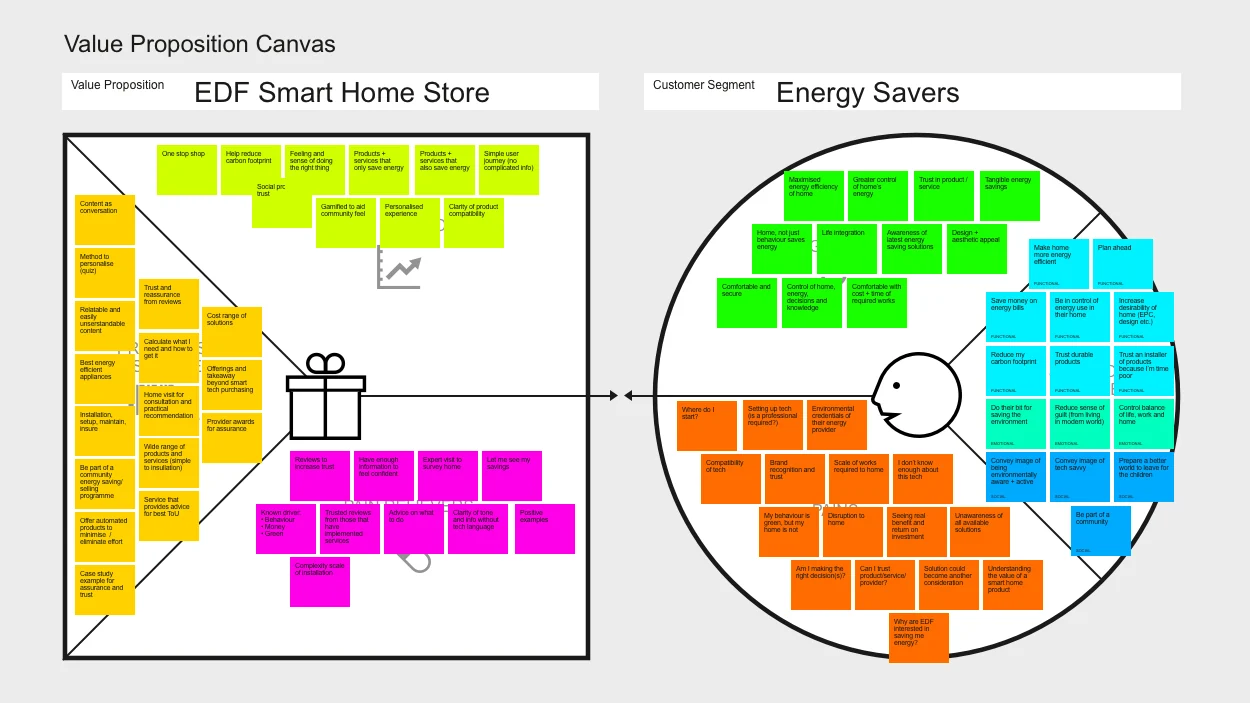
Customers buying smart home technology, or choosing a phone and plan, stall at the same point: they aren't sure which option is right. Guided experiences for EDF Energy's smart home store and a machine-learning advisor for telcos. 25% increase in smart-home store sales against KPI.
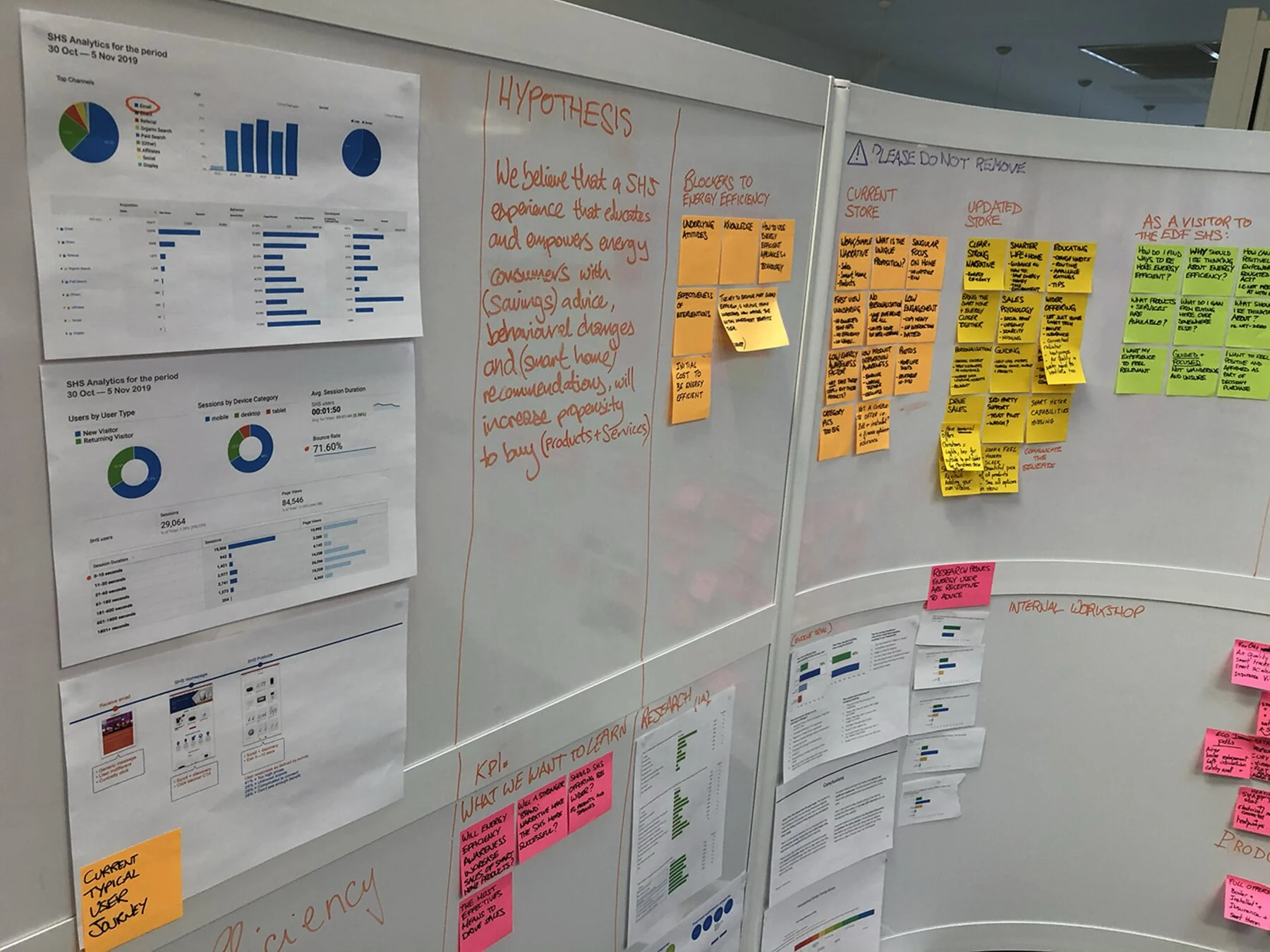
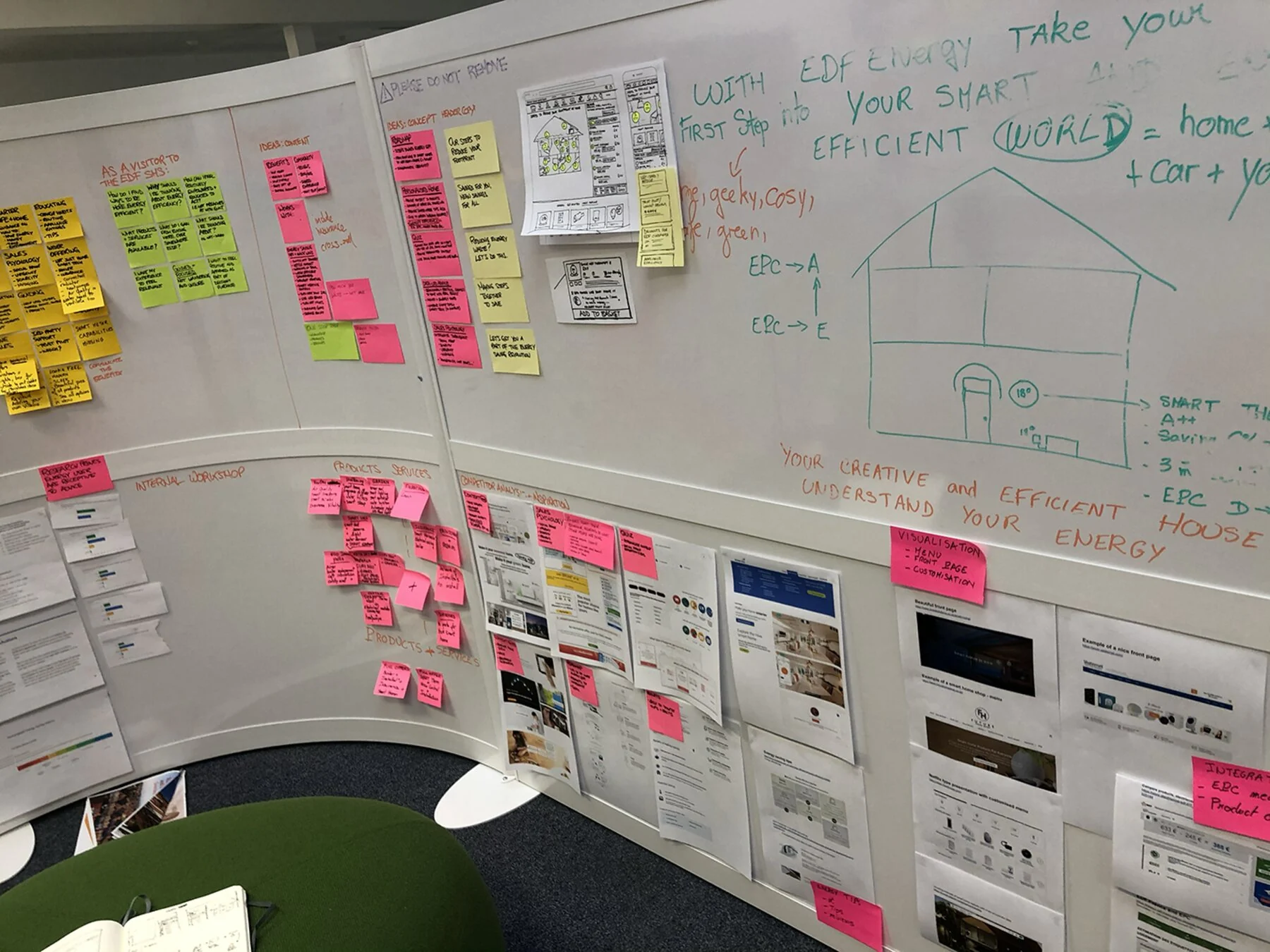
Considered purchases stall at the same point: the customer isn't sure which option is right for them, and a product grid or a page of generic advice doesn't resolve that. Two commerce platforms in two markets, one approach: guide people to a confident choice.
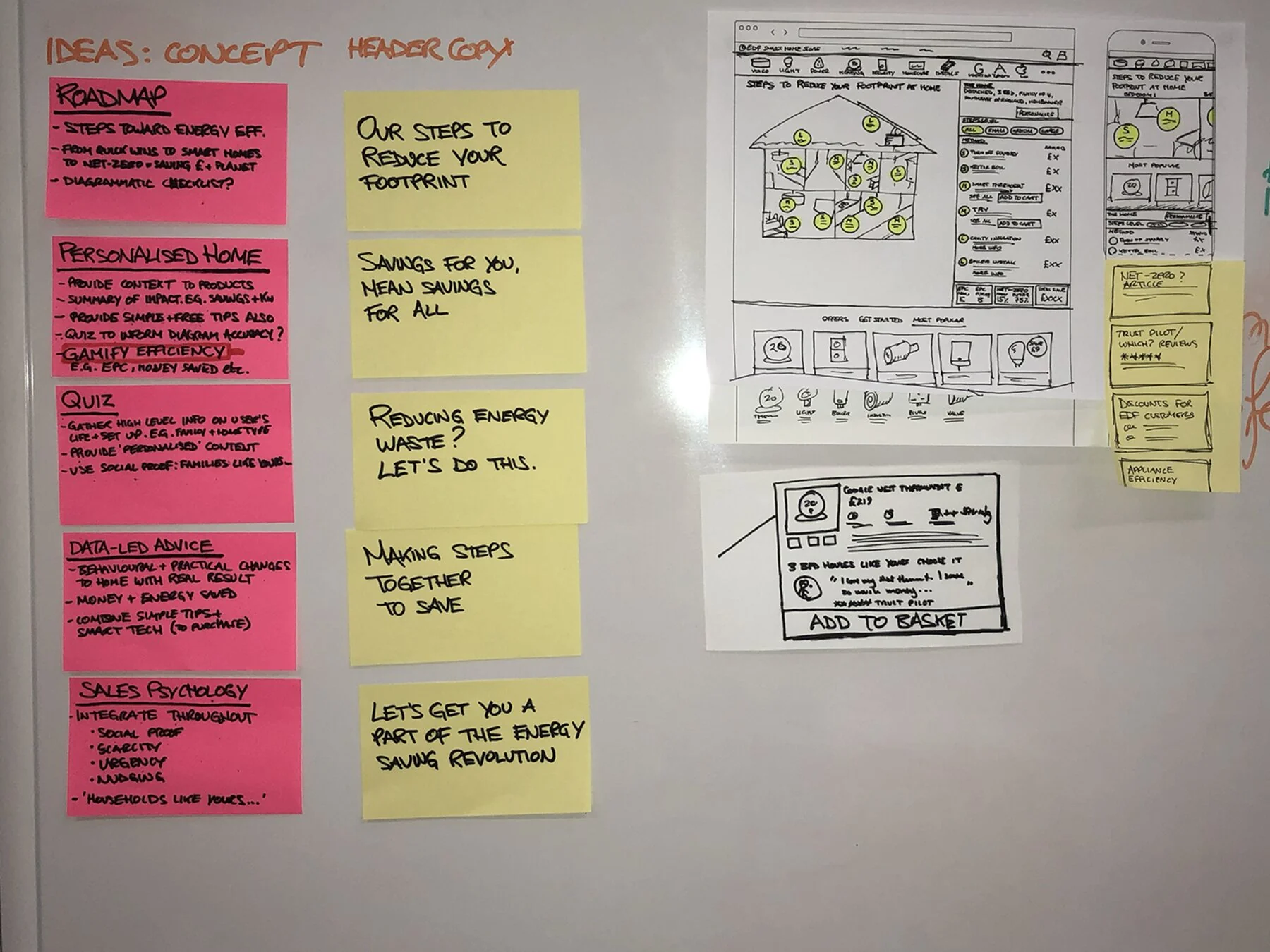
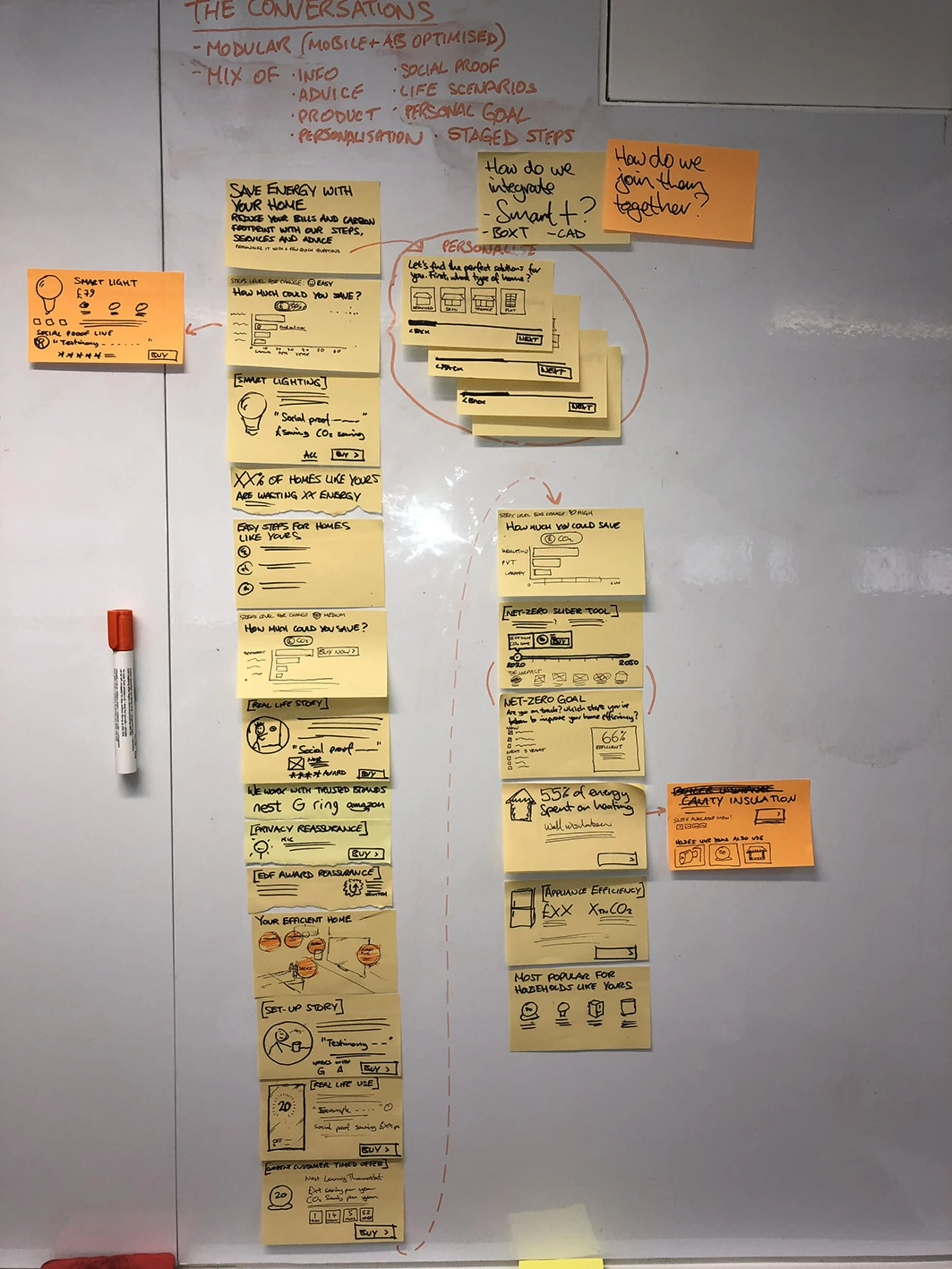
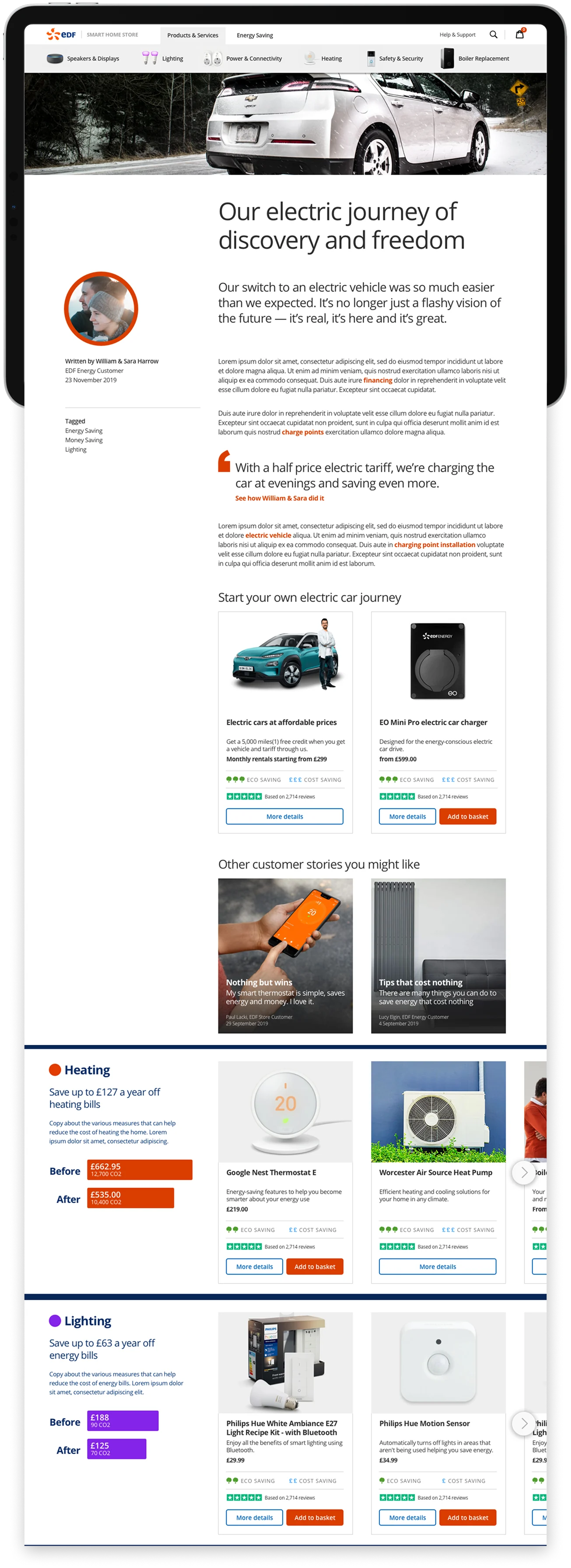
The goal was to increase sales of smart home technology, helping energy customers use energy more economically and take steps towards a low-carbon future. The barrier to heat pumps and smart thermostats wasn't awareness; generic advice doesn't change habits. I mapped real user needs and barriers with the PM throughout, designed modular tips and product recommendations tailored by usage and context, and prototyped and tested behaviour nudges and savings insights directly with users. The result was a 25% increase in smart-home store sales against KPI.
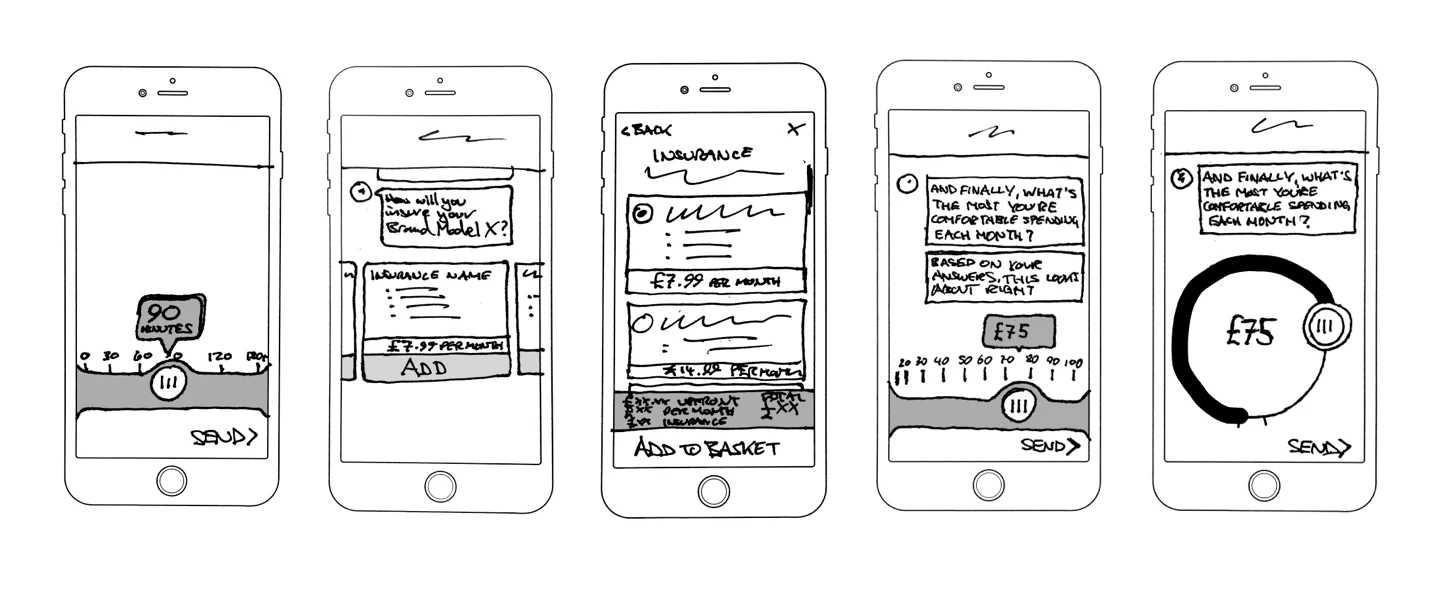
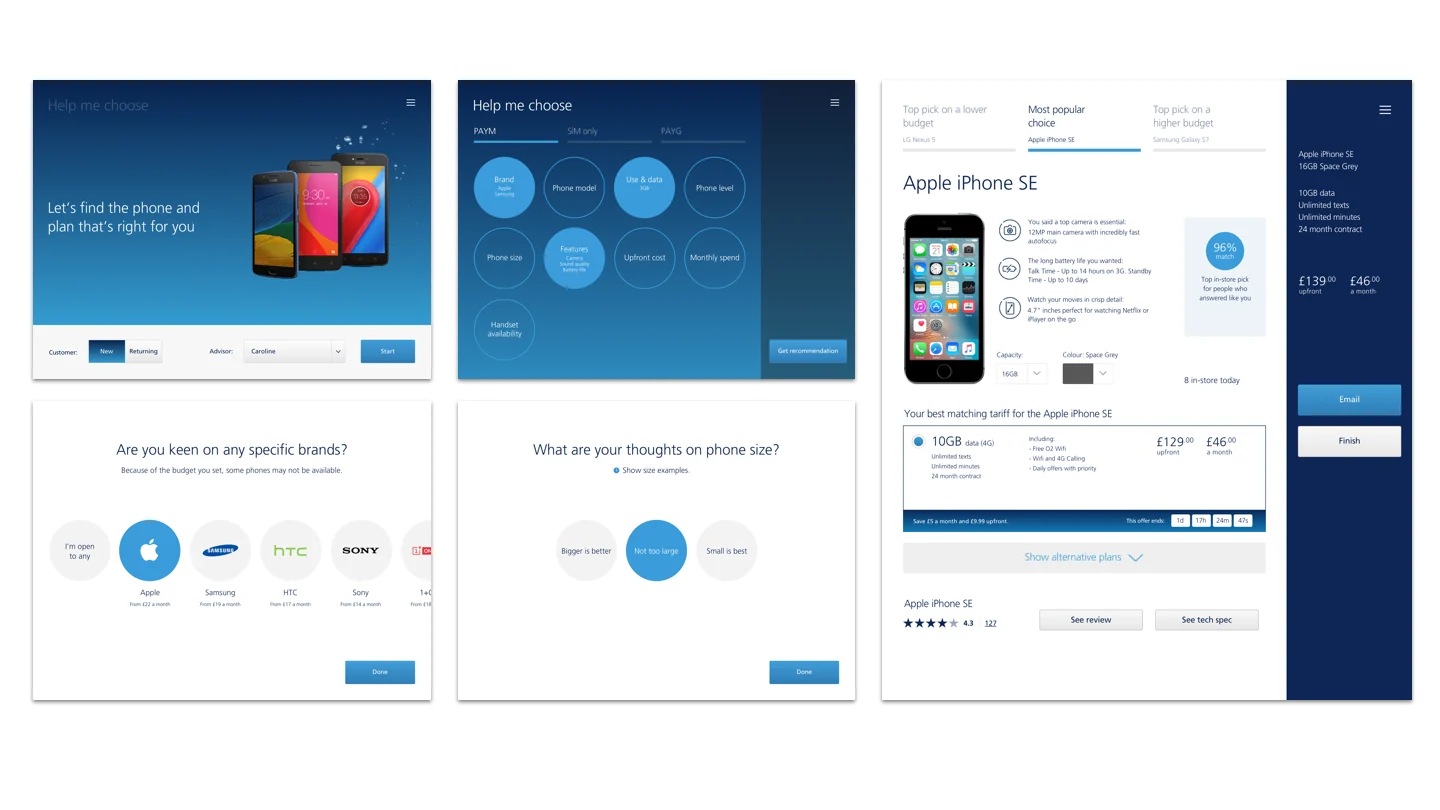
For telco companies including O2, EE, Verizon and Virgin Media, I designed an AI advisor that helps customers choose the best phone and plan for their needs, using machine learning to improve its recommendations. The work ran from research, workshops, ideation and usability testing through to technical validation, in close partnership with Data Science on A/B tests that challenged the design hypotheses. I introduced agile design while managing a small team, with the assistant supported across native and web.
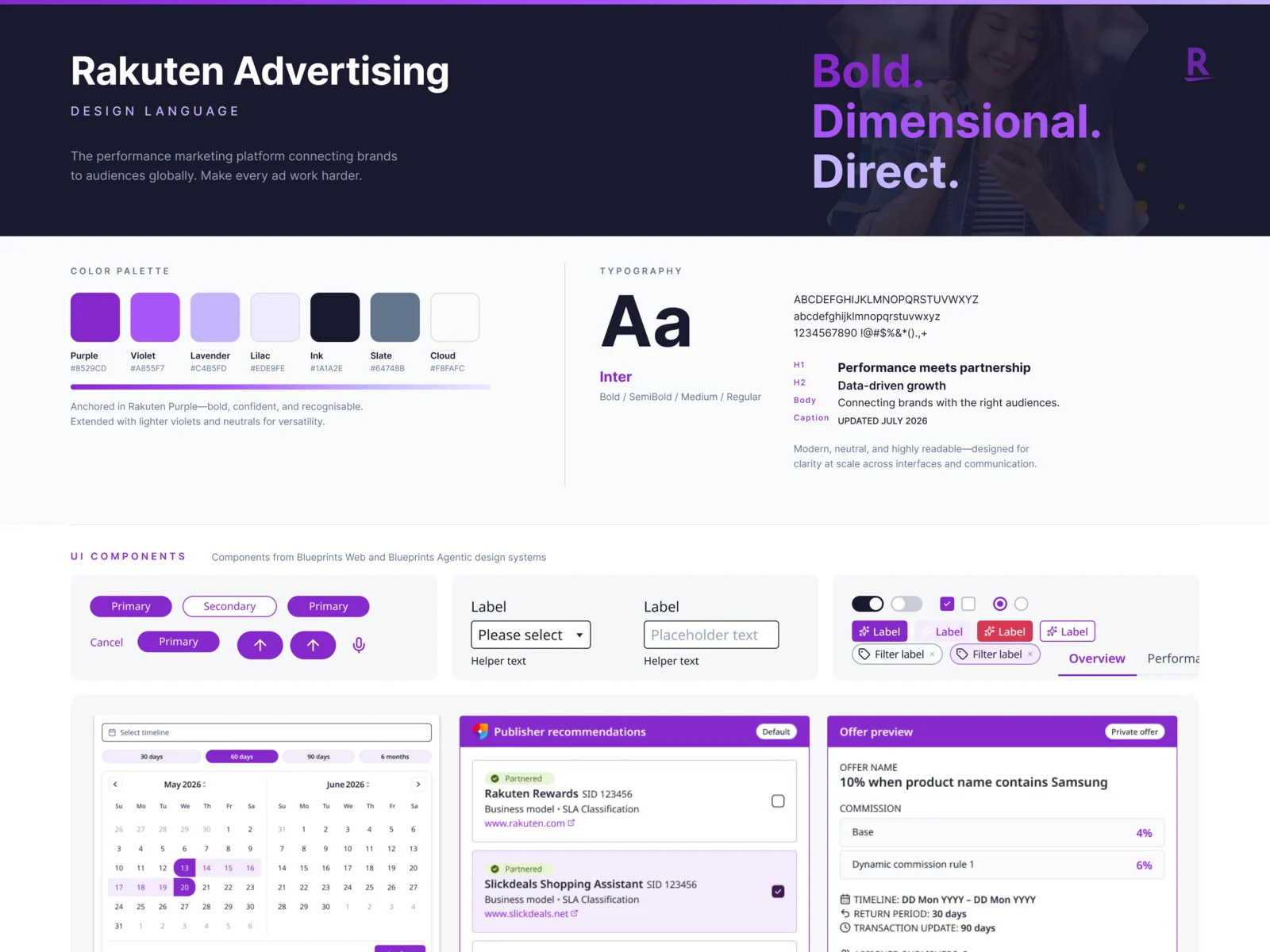
My career began in visual and brand design, and design systems are where that craft scales across product. A comprehensive UI kit, a one-page design language cheat sheet and an AI copywriting plugin that keeps the product team's tone and language consistent.
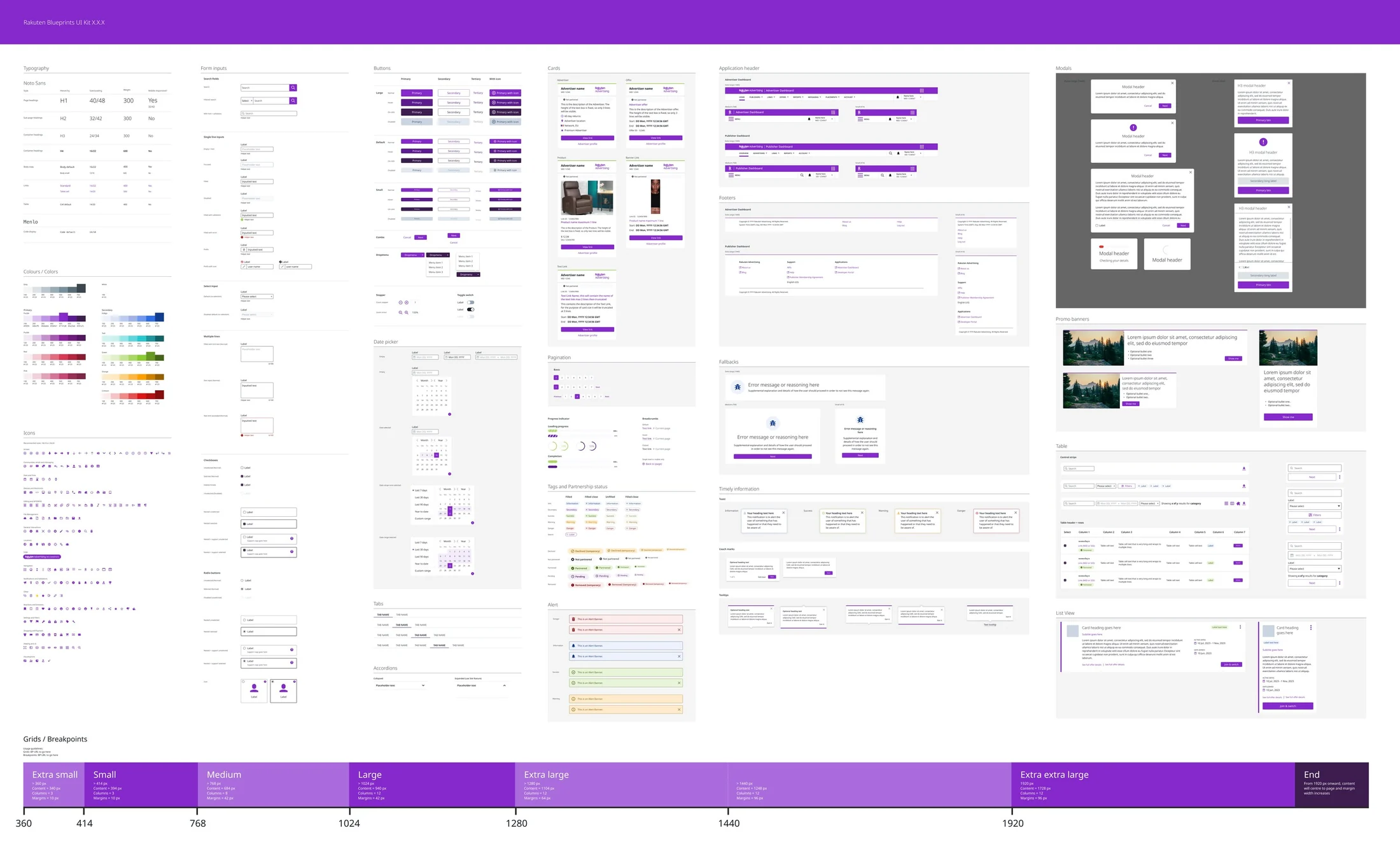
The Blueprints UI kit is a comprehensive library: typography, colour and icons, form inputs, buttons and cards, application headers and footers, modals, tables and list views, alerts and status tags, and a responsive grid with breakpoints from 360px to 1920px. It underpins both Blueprints Web and Blueprints Agentic. I inherited it as a single-product library. Working with and guiding a team of designers and engineers, we scaled it into the enterprise source of truth, in code and in design. One source of truth. My Product team own the governance, the React and Figma parity and the accessibility standards, plus the contribution process that lets teams extend it without fragmenting it.
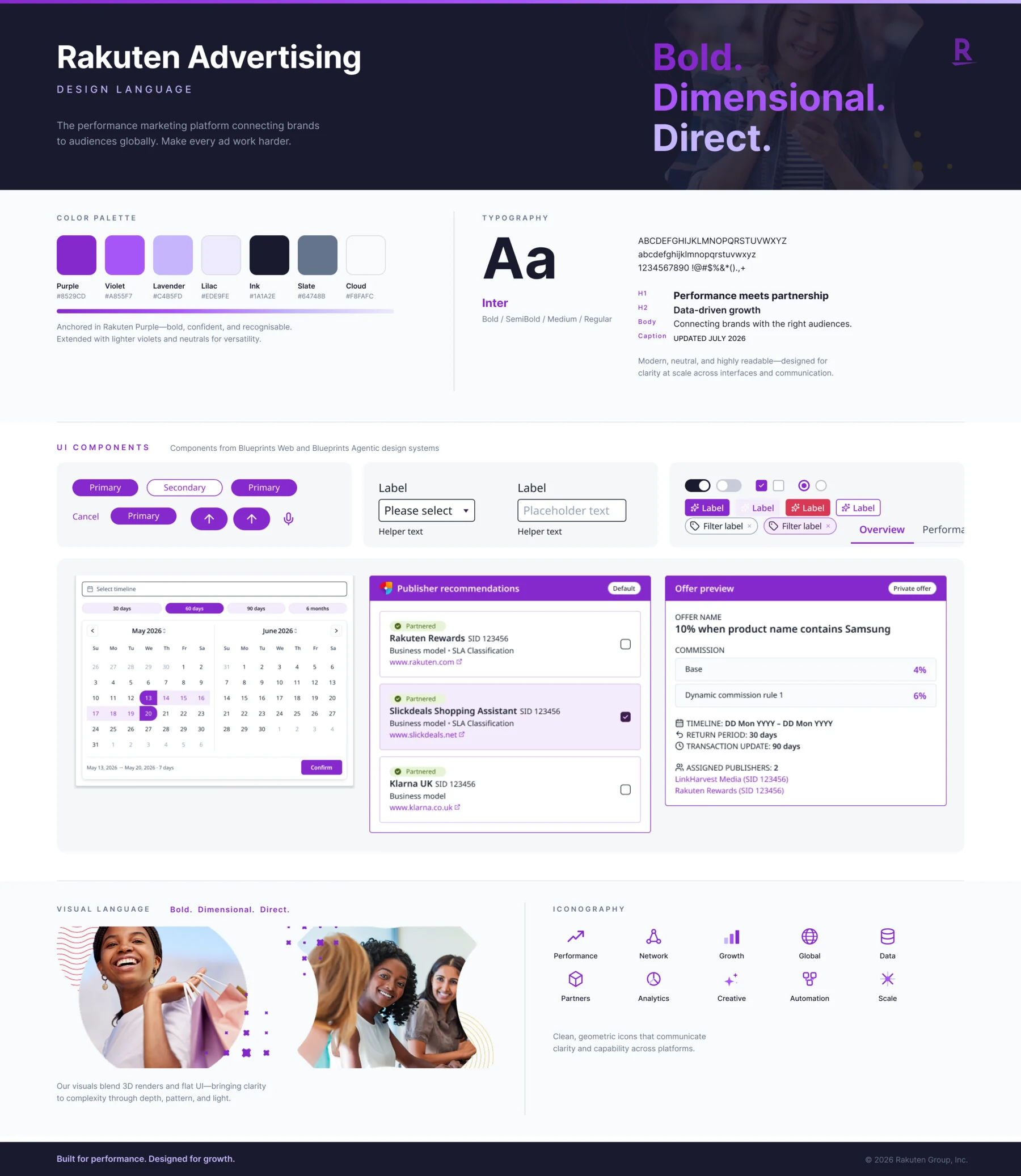
A reduced, one-page cheat sheet distils the system to its essentials: colour palette, typography, core components, visual language and iconography, anchored in three words: Bold. Dimensional. Direct. It gives teams a quick reference without opening the full library.
An AI-powered Figma plugin I created for the product team, to keep tone and language consistent across the product. A Generate tab produces multiple copy options from a short description; a Scrutinise tab rewrites existing copy for tone, length and clarity, trained on Rakuten copy style. Any option can be applied straight to a text layer.
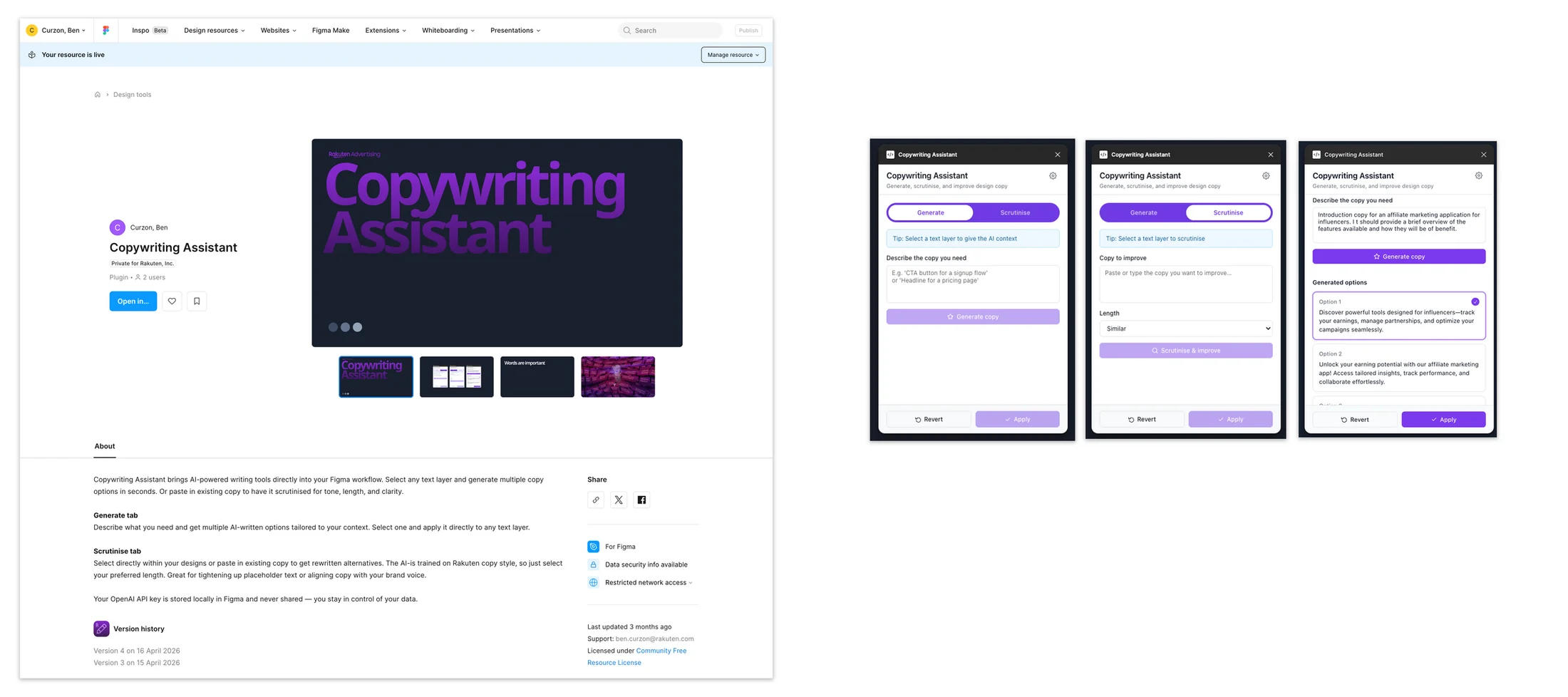
Met the Product team’s annual objective to unify content across the product.
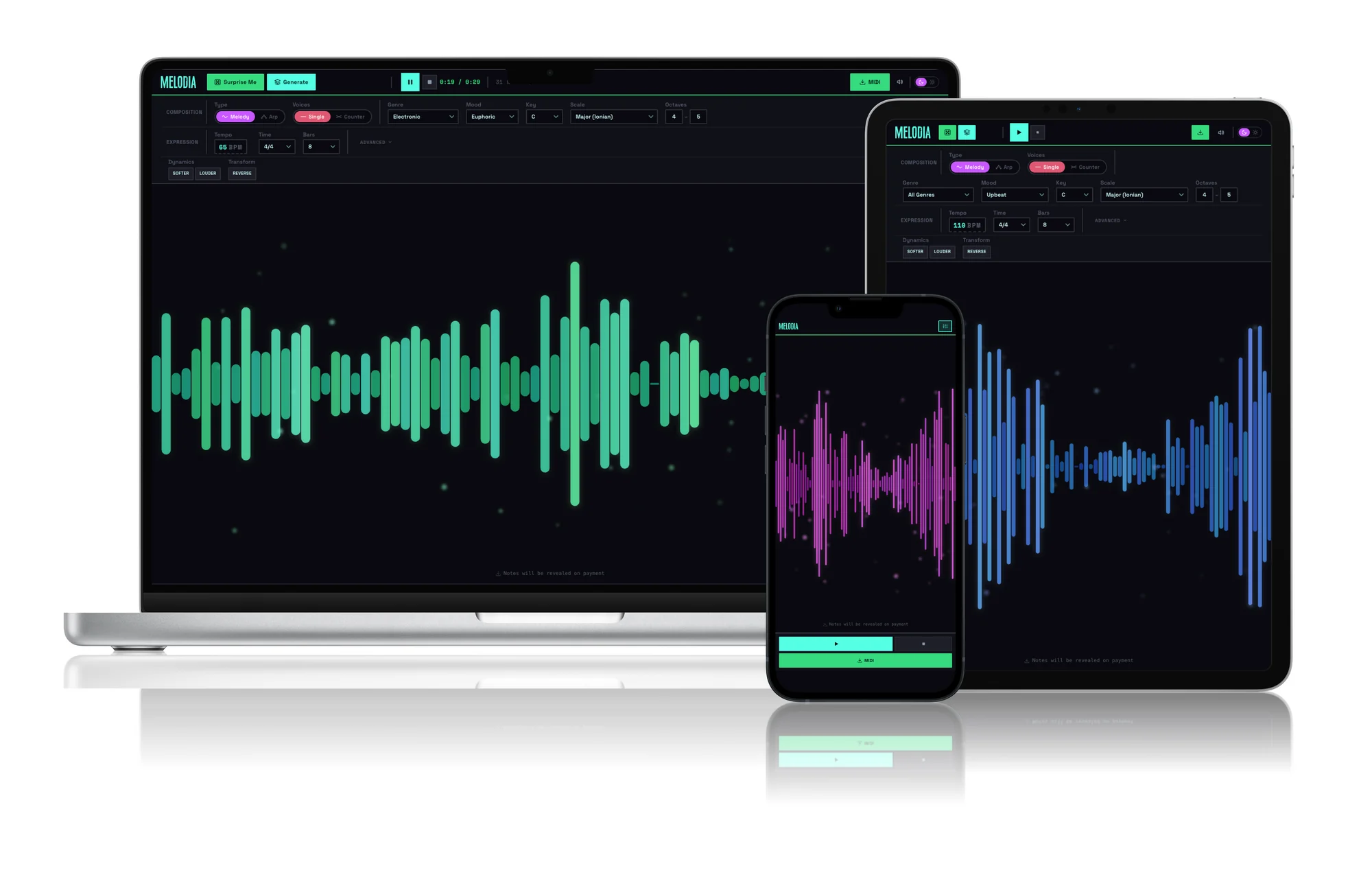
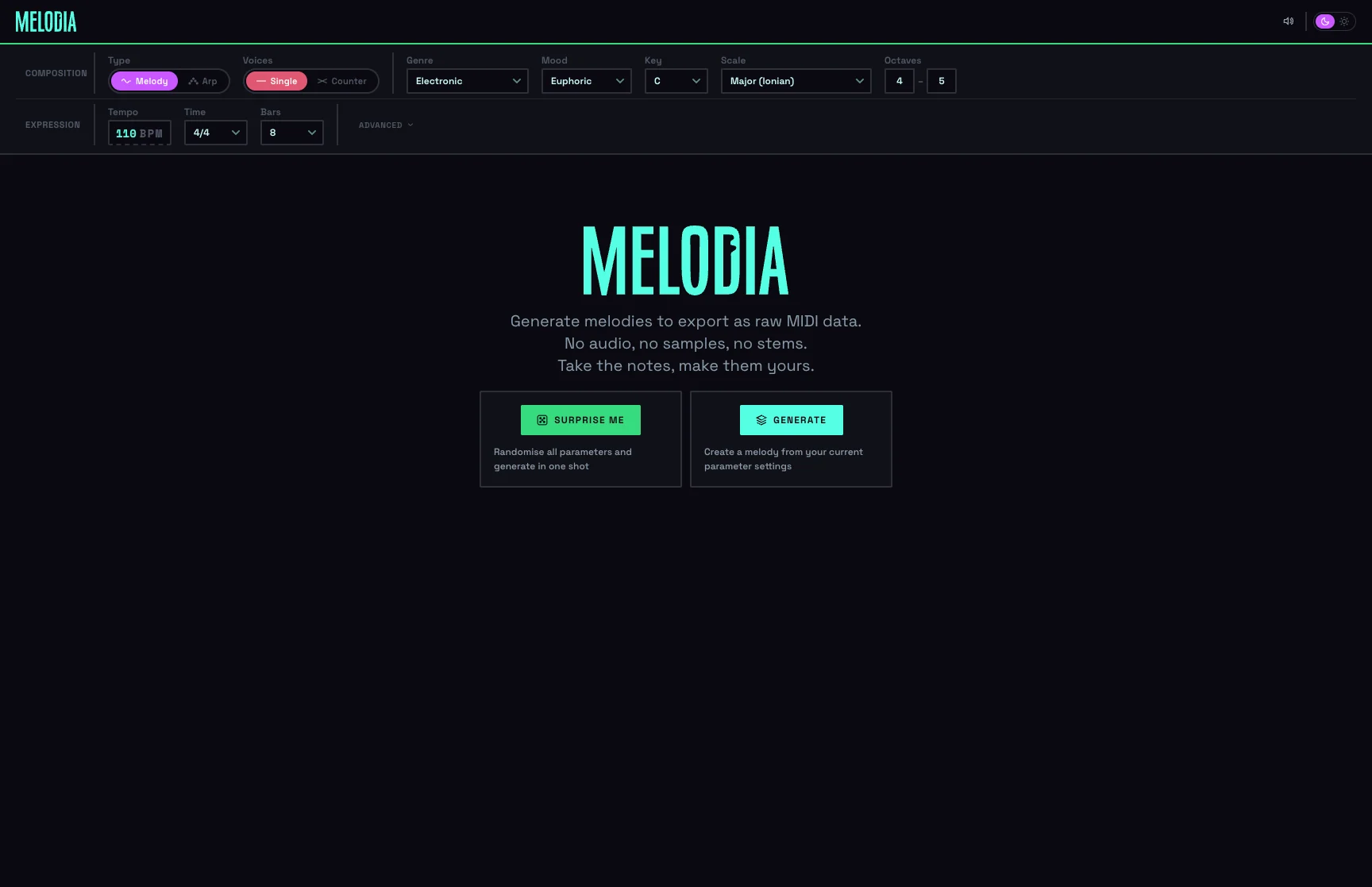
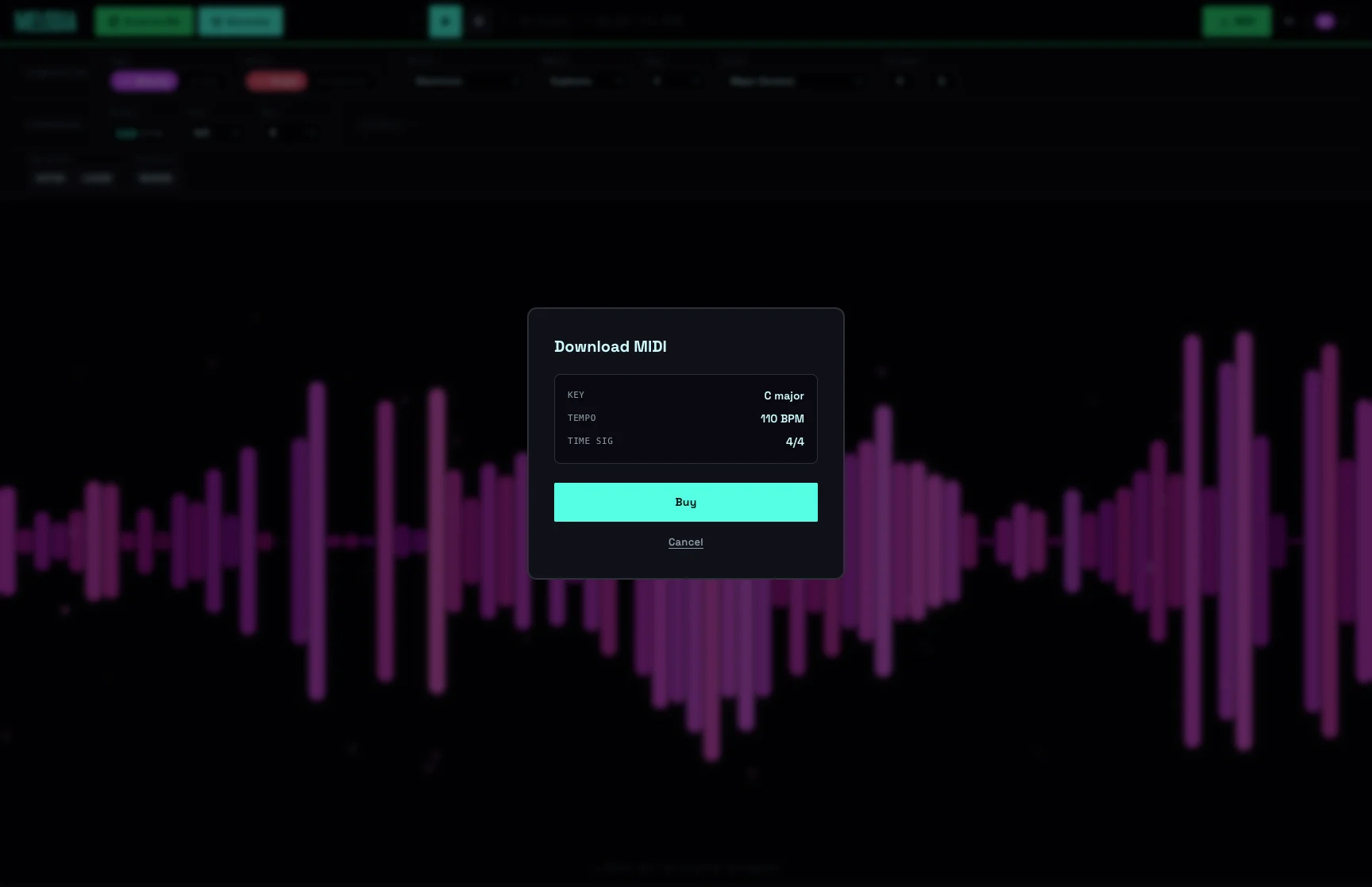
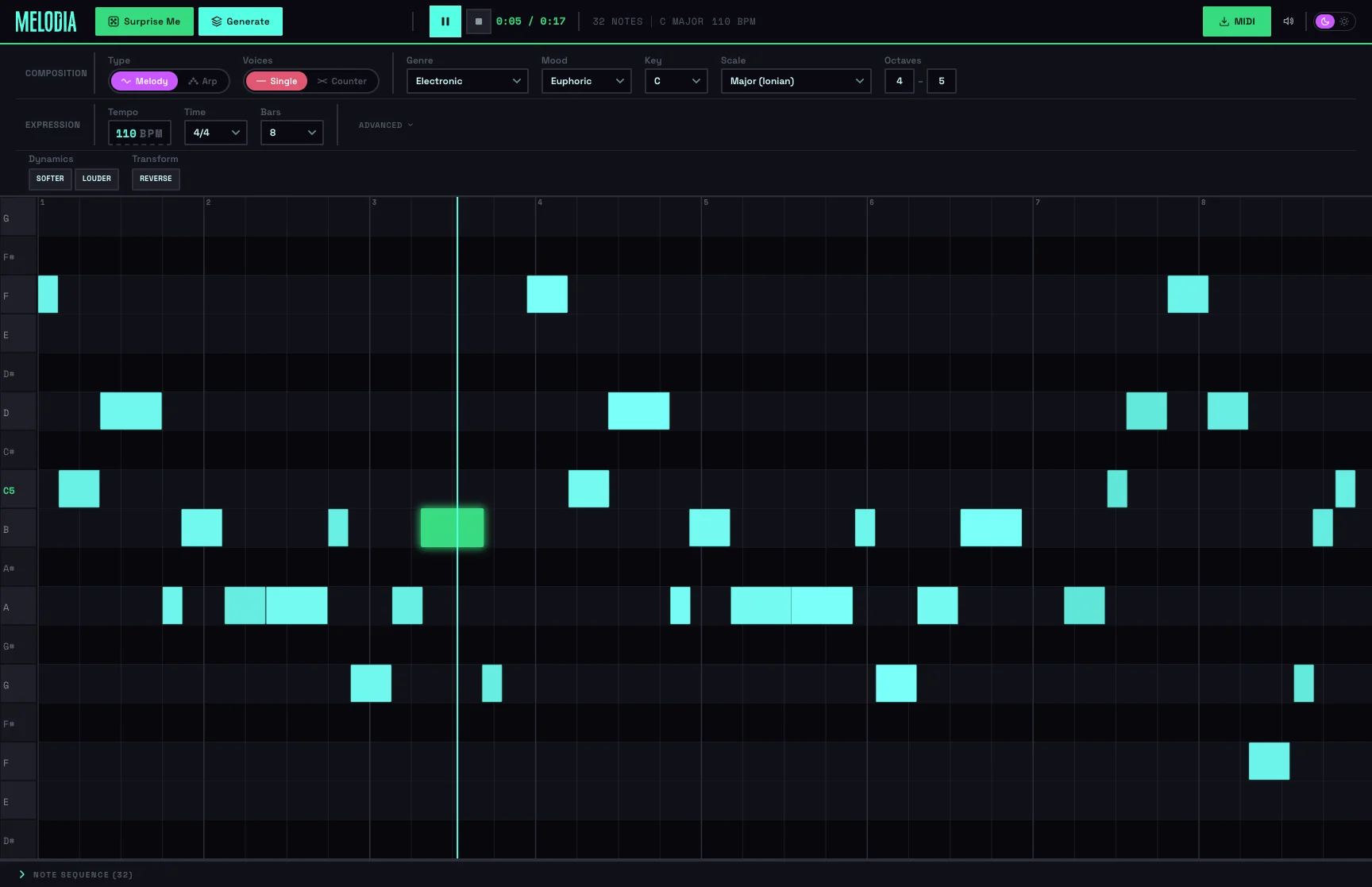
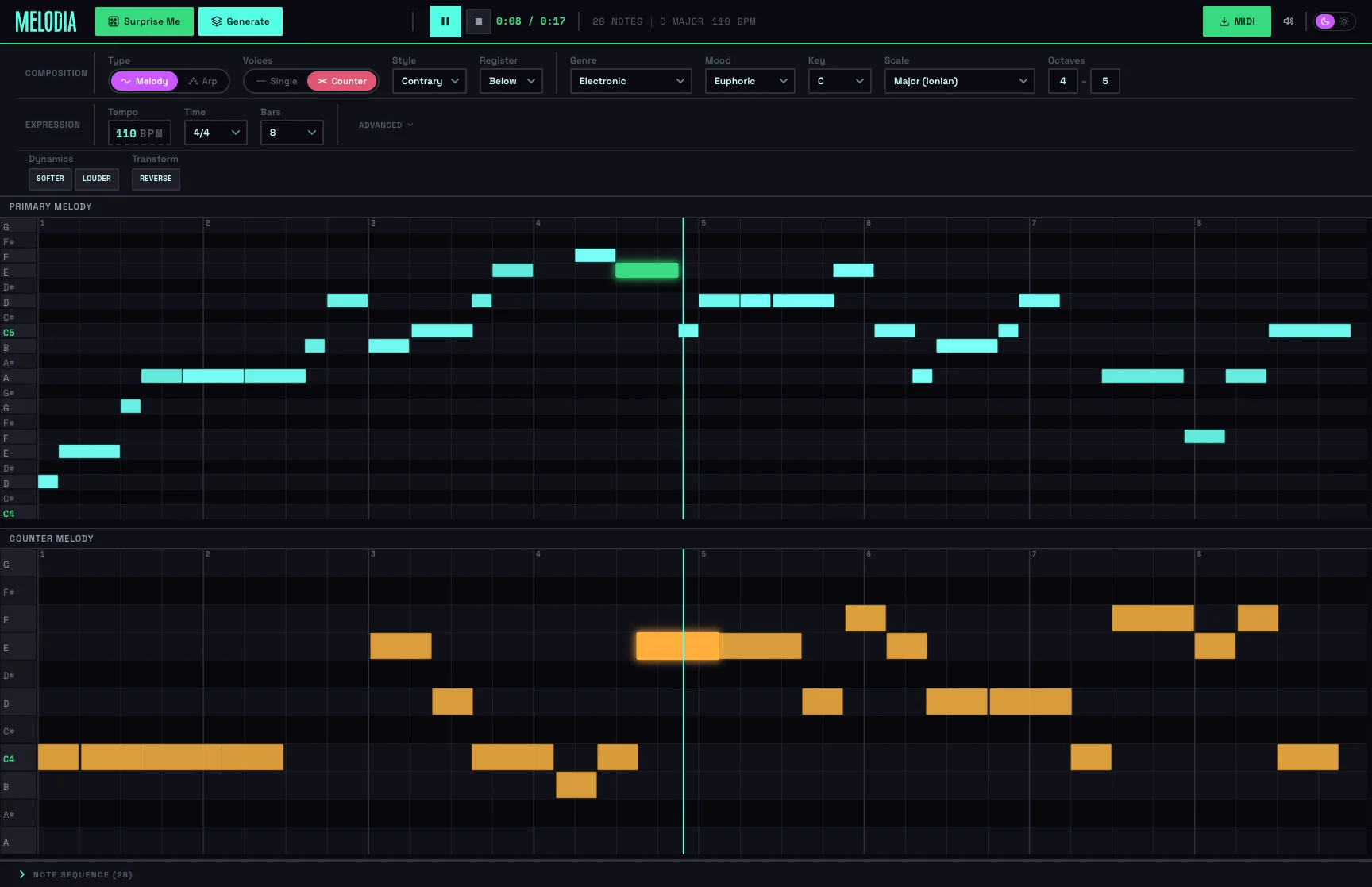
The same AI-assisted process as the work projects, but alone, end to end — music theory and a production background turned into a working melody-generation tool for musicians.
MVP hardcoded against real music-theory rules plus a pool of AI-generated reference motifs — no audio generated. Works fully offline, no server dependencies, fully responsive. Stack: React, TypeScript, Vite, Tailwind, Tone.js. Roadmap: AI motif generation, a payment gateway and affiliate links to sound sources.
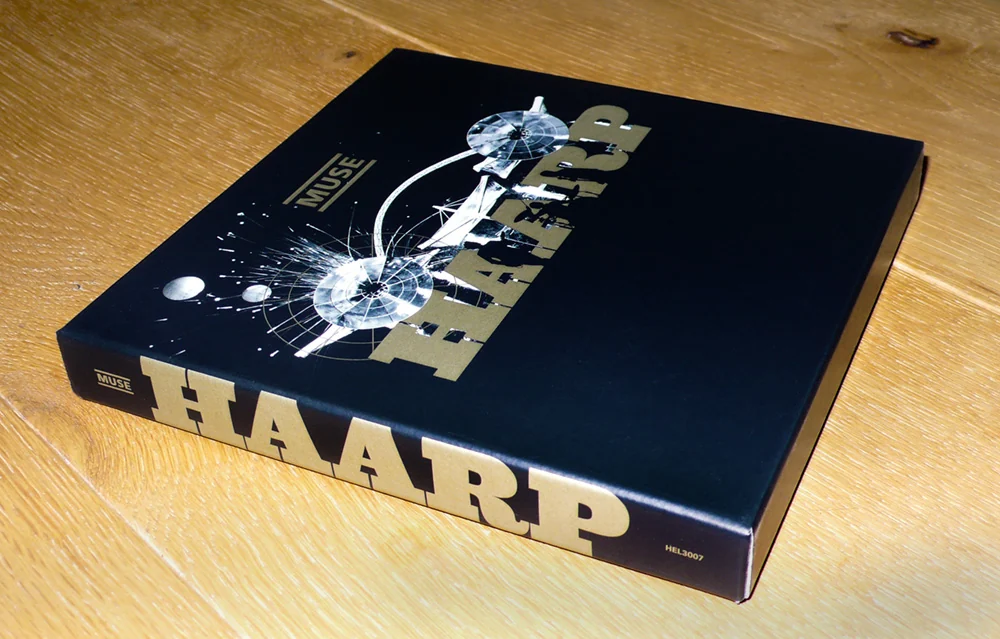
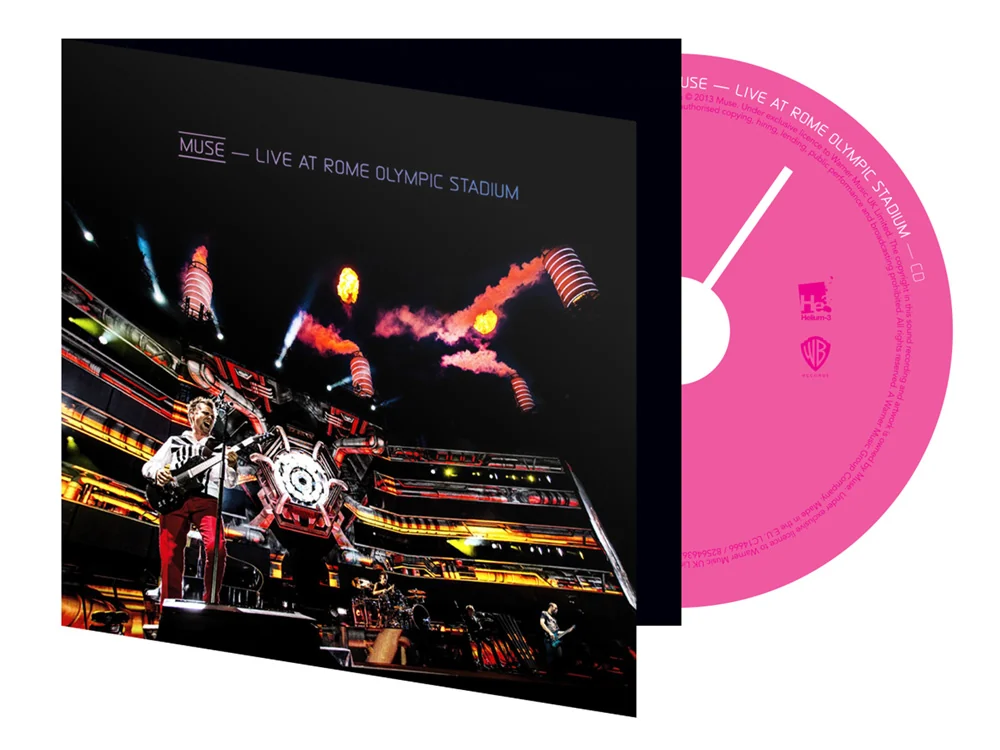
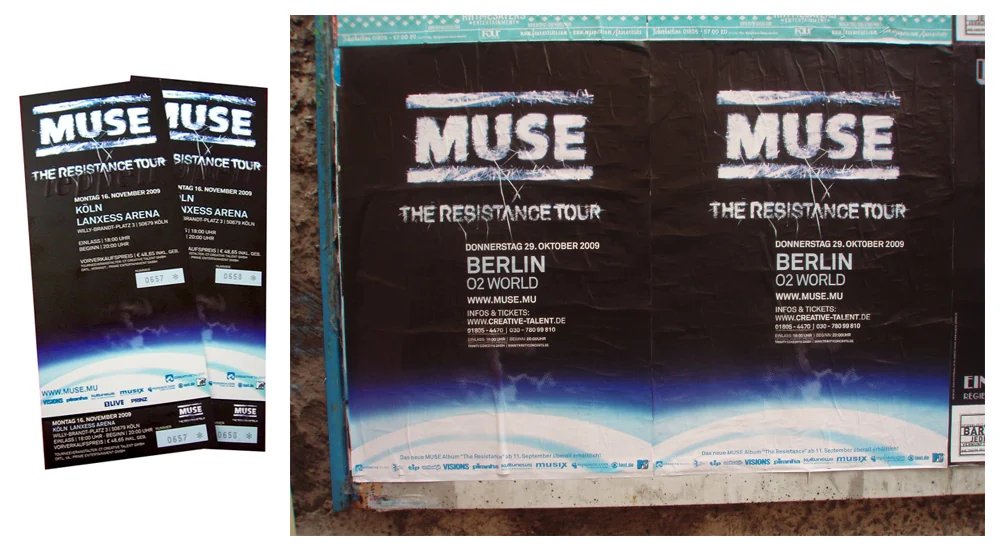
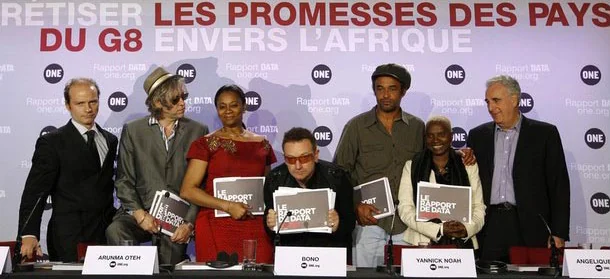
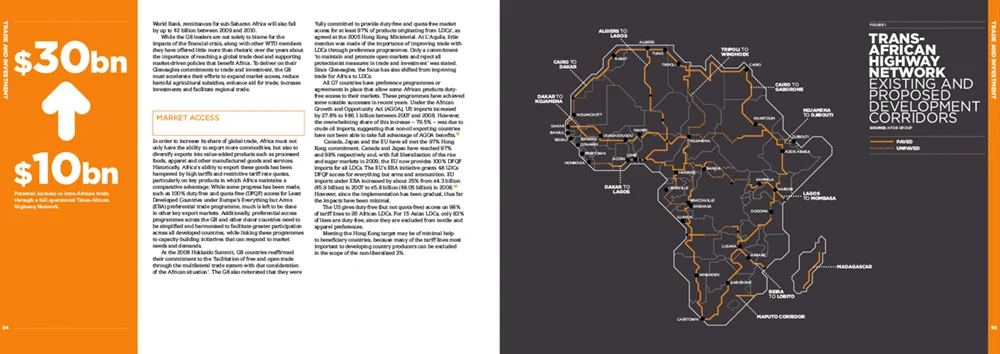
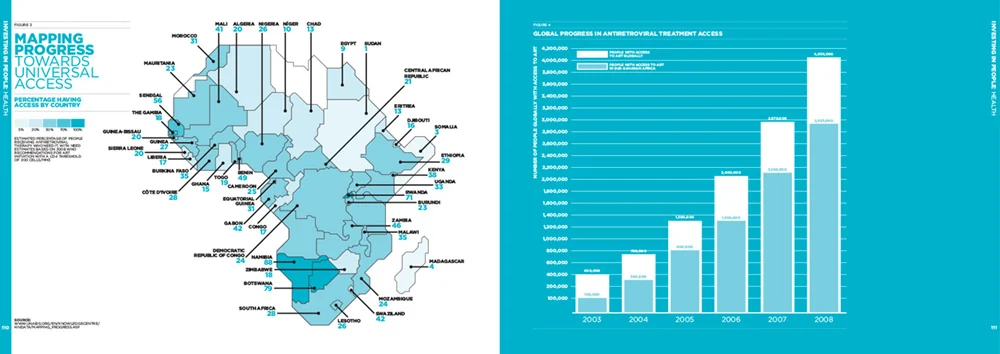
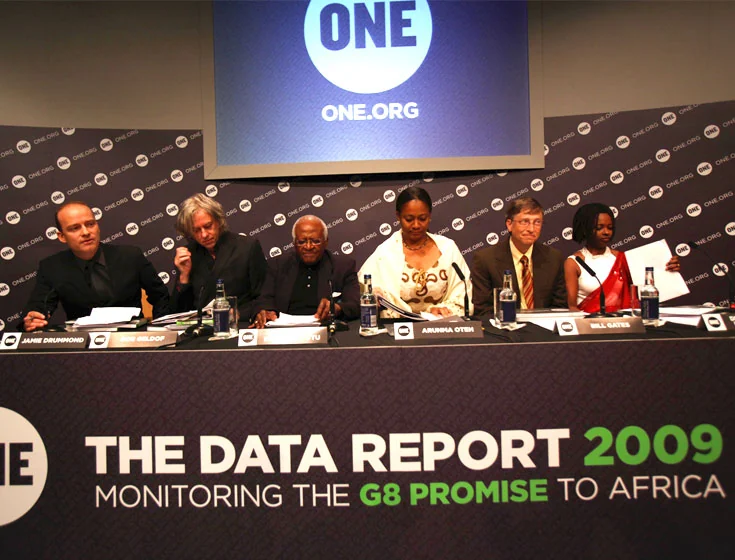
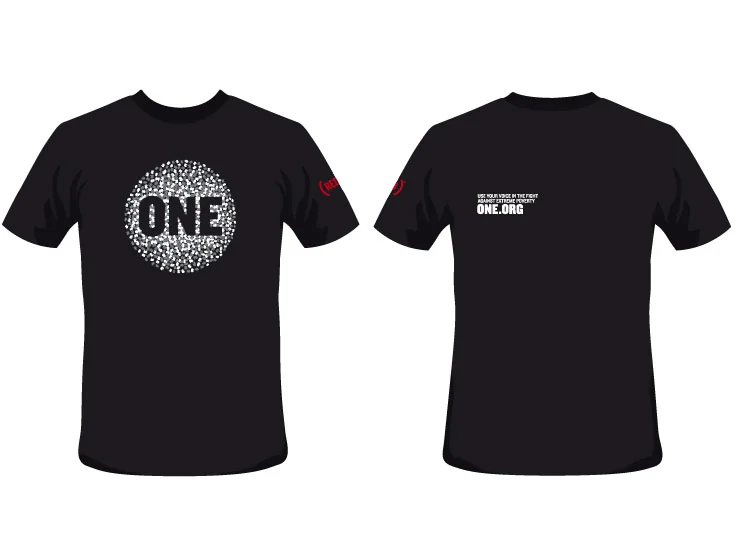
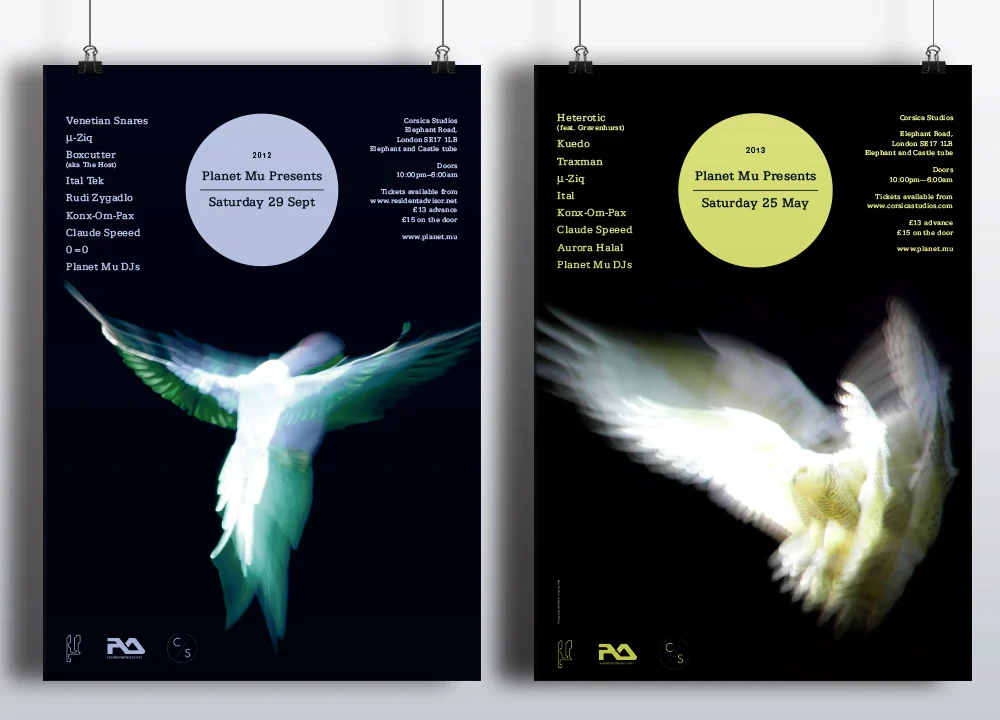
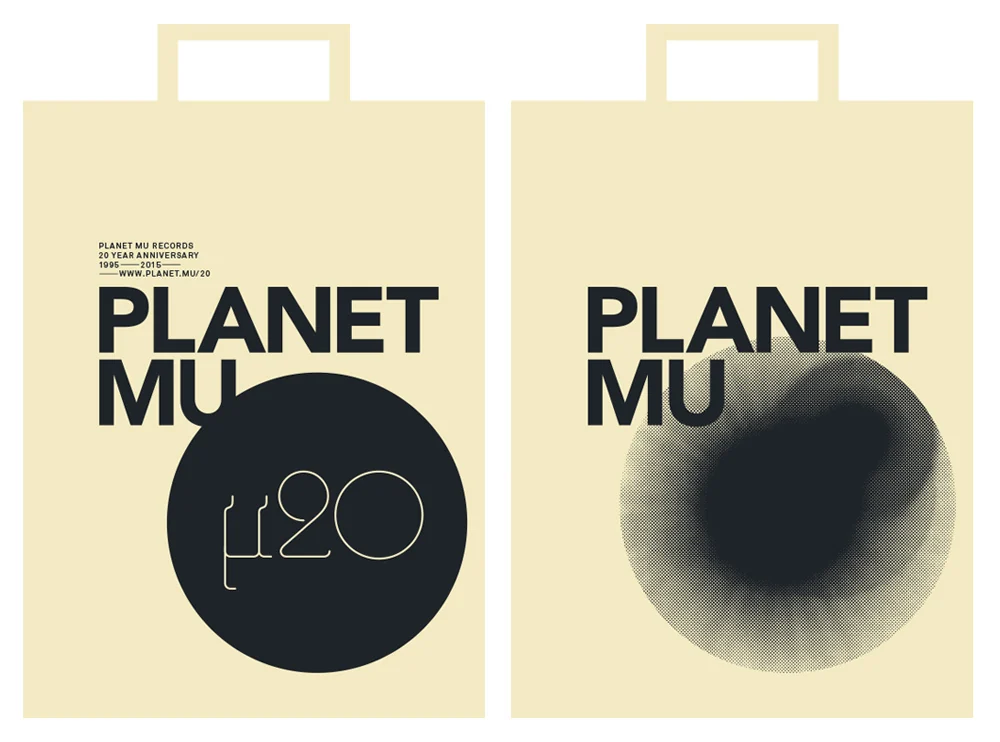
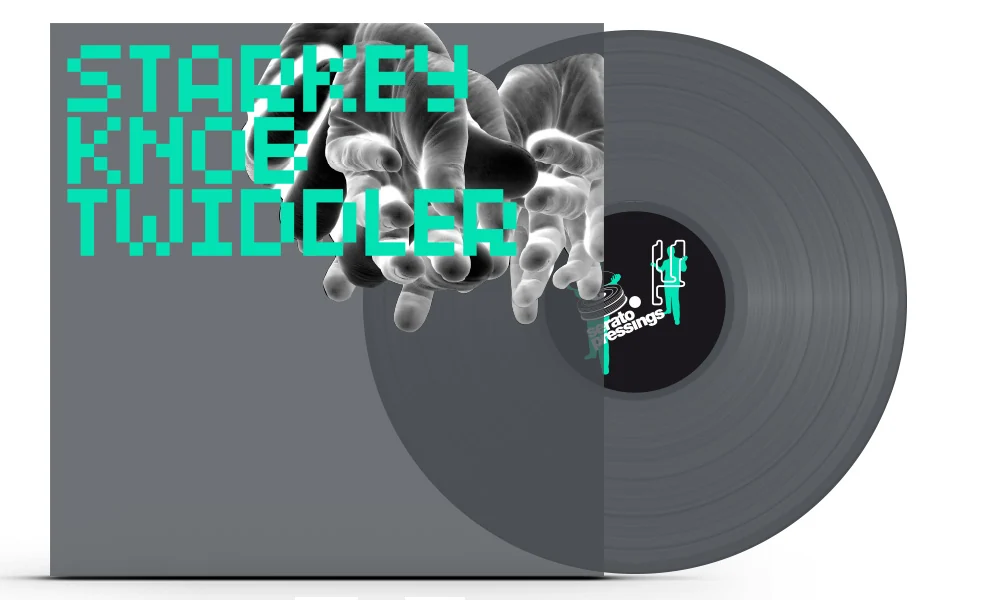
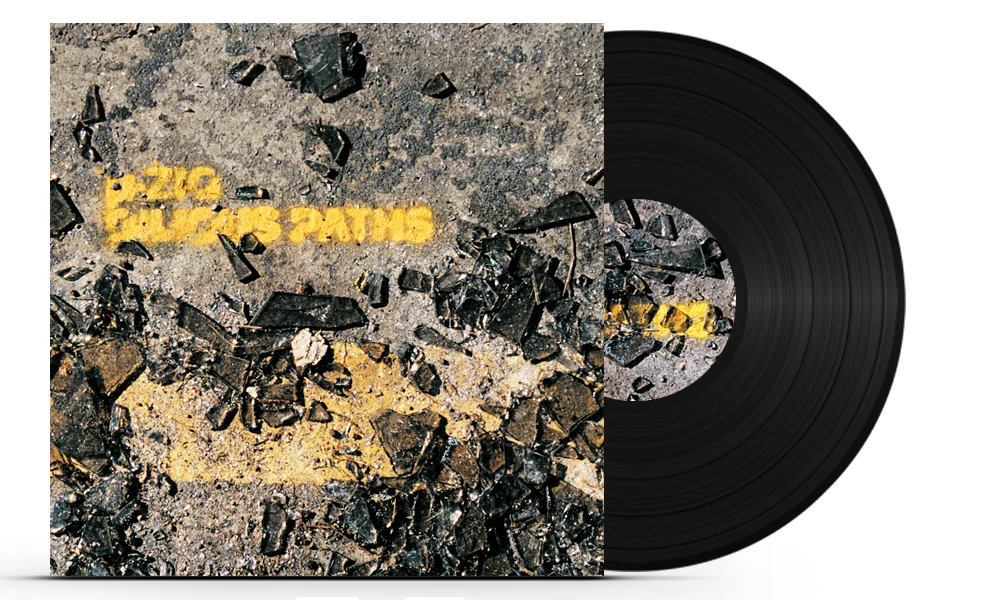
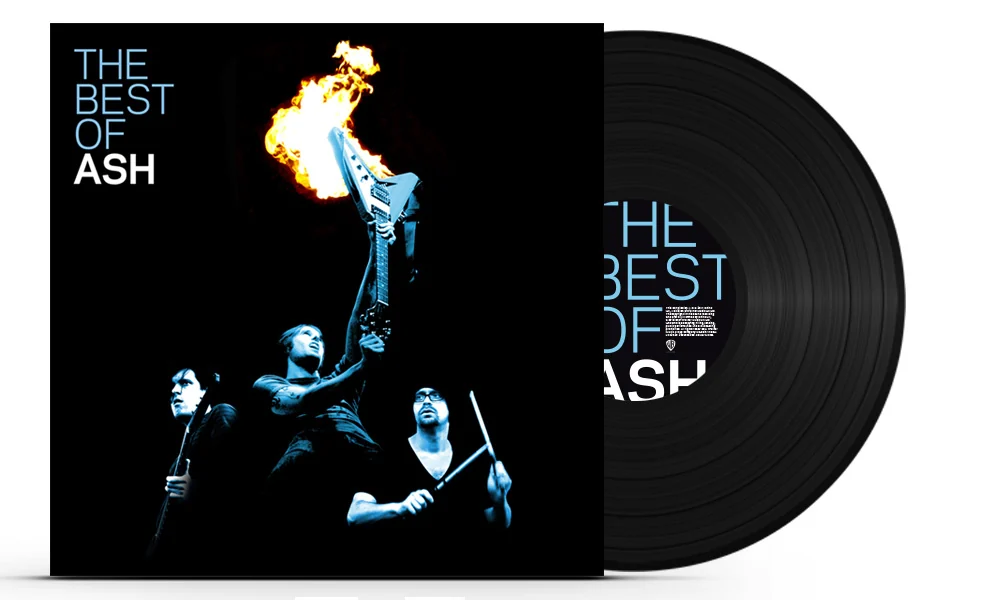
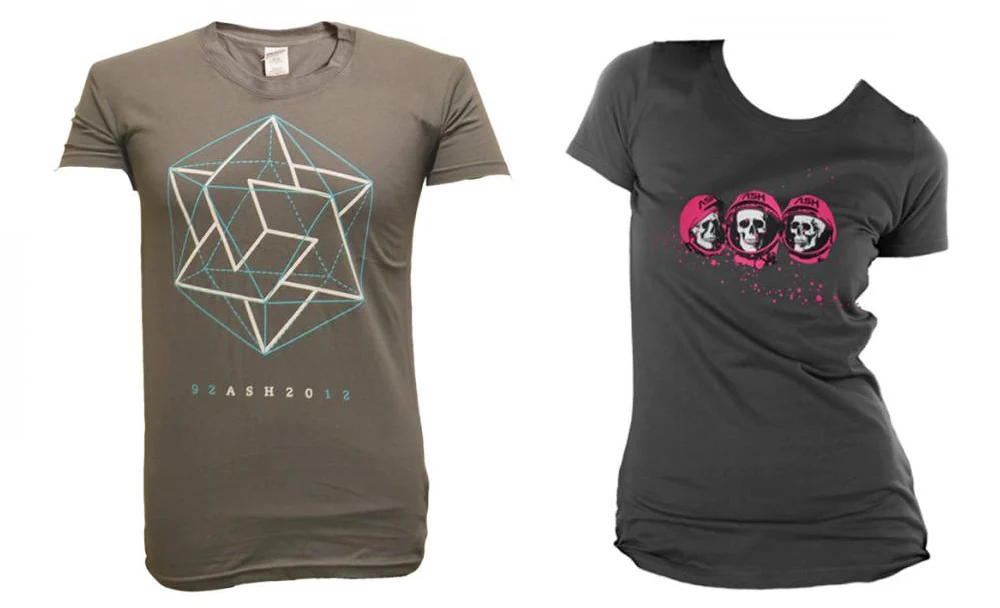
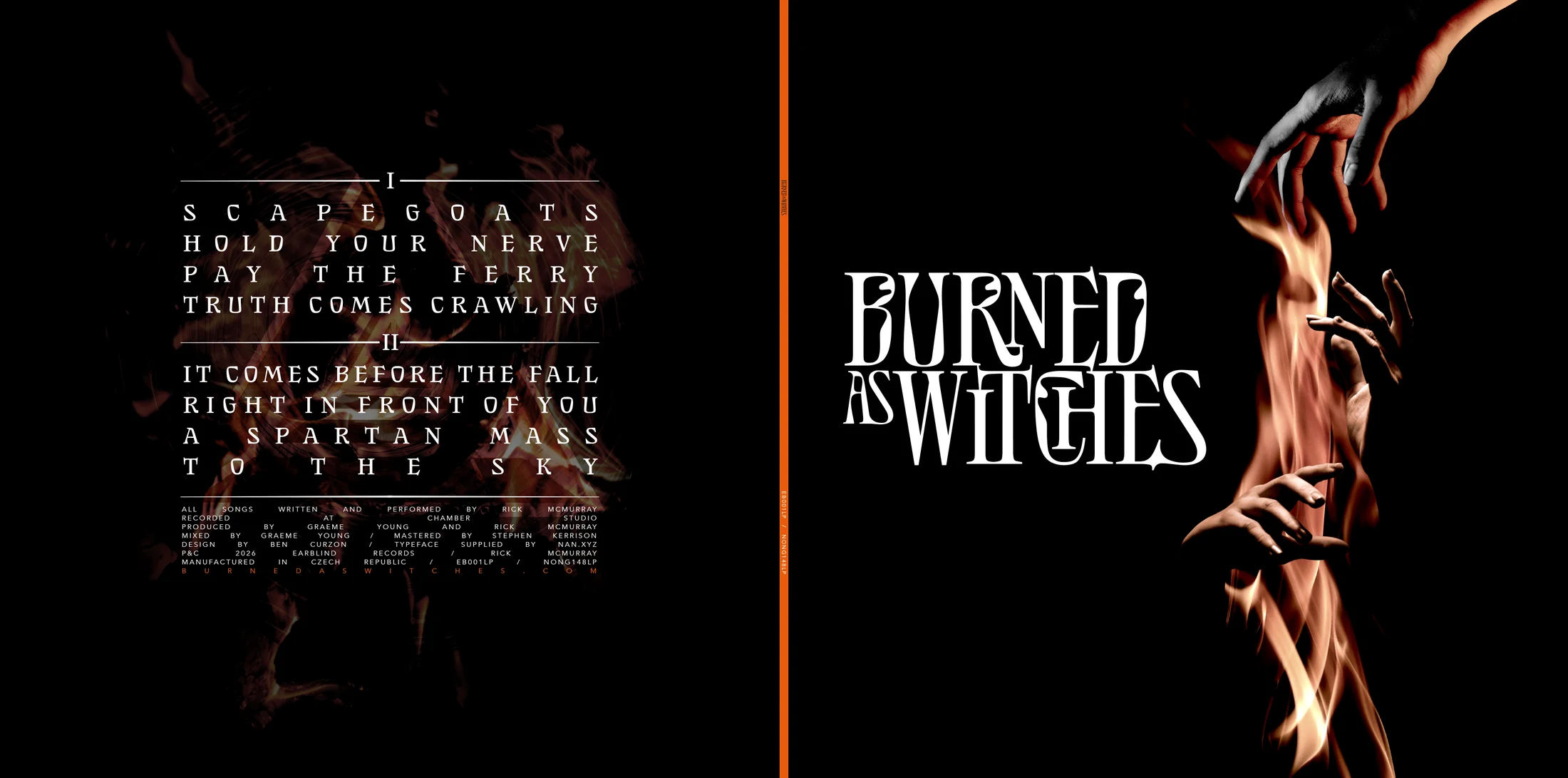
I began my professional career as a graphic designer and art director. I continue to design to this day, but more as a sideline hobby. These are a handful of those sideline projects.
Experience
Leading design for a connected product suite and its design system, with a rapid shift toward agentic AI. Driving AI-powered automation and personalisation, growing and mentoring the design team, and moving legacy ways of working to AI-first. Led an initiative that increased network gross sales by $200M.
Design strategy and technology innovation to help speed the shift to a low-carbon society, with every piece of work tied to growth-driving KPIs.
Led design for an AI-led advisor that boosts digital sales and customer experience, blending sales psychology, machine learning and UX. Led the design team, embedded agile design and worked closely with Data Science on A/B testing and validation.
Led user-centred design across AV-connected applications and live-stream services, driving agile optimisations and technology solutions.
Created connected experiences and digital transformation through user-centred design at a multi-channel digital technology consultancy.
Worked with brands, artists, NGOs and organisations on packaging, campaigns, editorial, merchandise and video, from concept to production.
Editorial design, advertising campaigns, illustration and branding.
Led creative design, branding and campaign briefs from concept to delivery.
Music has been an integral part of my cultural expression for as long as I can think back. I continue to explore production and songwriting.
Let's talk.
Hiring or want to talk about a project? Send me a note and I'll get back to you.
I'll reply to the email address you supplied.